Lamtumirë, e Dashur Lisa 
Falenderoj nga zemra të gjithë ata që na qëndruan pranë 
3 gusht 2026
Nga Harry Bajraktari
Ditët e fundit kanë qenë ndër më të vështirat e jetës sime. Lamtumira me Lisën, bashkëshorten dhe shoqen time të jetës, ka lënë në zemrën time një zbrazëti që fjalët nuk mund ta përshkruajnë.
Megjithatë, në momentet tona më të vështira, familjet Bajraktari dhe Milicaj ishin të rrethuara me dashurinë, respektin dhe ngushëllimin e shumë familjarëve e miqve që erdhën nga mbarë bota dhe na kontaktuan përmes telefonatave, letrave, mesazheve, luleve dhe lutjeve 


Disa e kishin njohur Lisën prej shumë vitesh. Të tjerë e njihnin përmes shërbimit publik, biznesit apo kontributit të saj për Amerikën dhe çështjen shqiptare. Prania e tyre na kujtoi se sa shumë jetë kishte prekur Lisa.
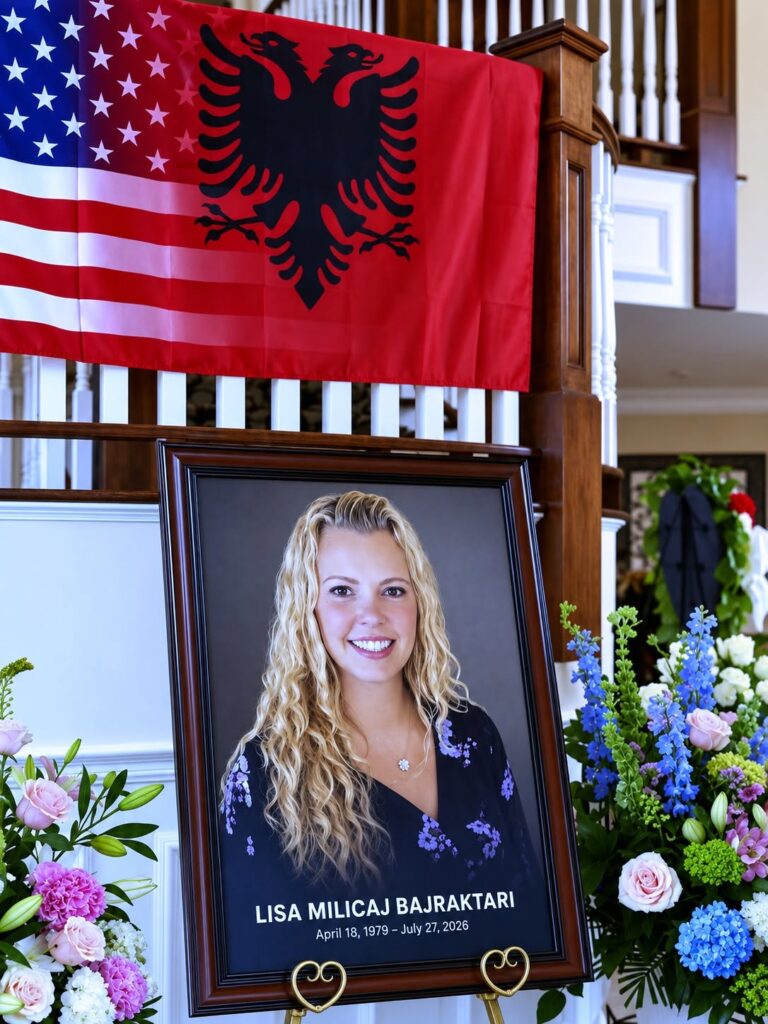
Homazhet dhe pritja e ngushëllimeve u mbajtën më 31 korrik 2026, në Shtëpinë e Funeraleve “Pleasant Manor”, në Thornwood të Nju Jorkut.
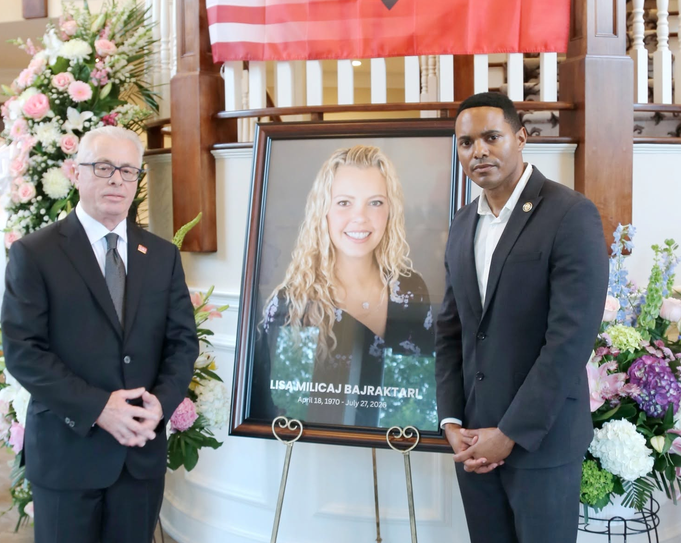
I jam thellësisht mirënjohës kongresmenit Ritchie Torres, miku im dhe miku i madh i shqiptarëve, i cili erdhi për të shprehur ngushëllimet dhe i dorëzoi familjes sonë një flamur amerikan që valoi mbi Kupolën e Kongresit të Shteteve të Bashkuara më 29 korrik 2026, në nderim të Lisës. Ishte ky një nder i madh për Lisën e cila e donte jashtëzakonisht shumë Amerikën.
Kongresmeni Mike Lawler, miku im dhe miku i madh i shqiptarëve, na nderoi me praninë e tij në meshë dhe në lutjet për shpirtin e Lisës. Prania e tij dhe mbështetja që na dha nderoi familjen tonë.
Ambasadori William Walker erdhi për të shprehur ngushëllimet e tij dhe për të nderuar Lisën dhe familjen tonë. Ishte nder i madh të kishim pranë nesh njeriun që ndihmoi në shpëtimin e popullit të Kosovës.
Rasim Hasanaj, ish-Kryetar i Komitetit Shtetëror për Kultet në Shqipëri, udhëtoi nga Tirana për të qenë me ne. Nuk gjej dot fjalët për të shprehur se sa shumë më ka nderuar prania e tij.
Falënderoj gjithashtu Kol Milicajn, kushëririn e Lisës, i cili udhëtoi nga Zvicra për të qenë me ne.
Kryetari i Qarkut Westchester, Ken Jenkins, dhe Kryetari i Bashkisë së Yonkersit, Mike Spano, gjithashtu na u gjendën pranë. I falënderoj të dy që gjetën kohën për të qenë me ne.
I jam thellësisht mirënjohës Anu Prattipatit, e Ngarkuar me Punë në Ambasadën e Shteteve të Bashkuara në Prishtinë, për letrën e saj të ngushëllimeve.
E falënderoj Presidentin e Shqipërisë, Bajram Begaj, i cili nderoi familjen tonë me një telegram ngushëllimi. I jam mirënjohës gjithashtu Princ Lekës për mesazhin e tij të ngrohtë.
Morëm letra dhe mesazhe edhe nga ish-Presidentët e Kosovës, Fatmir Sejdiu, Behgjet Pacolli, Atifete Jahjaga dhe Vjosa Osmani. I falënderoj të gjithë që më nderuan mua dhe familjen time.
I jam shumë mirënjohës ish-Kryeministrit të Shqipërisë, Dr. Sali Berisha, dhe bashkëshortes së tij, Lilit, të cilët shprehën ngushëllimet e tyre dhe dërguan një kurorë të bukur me lule në kujtim të Lisës.
Dëshiroj të falënderoj ish-Kryeministrin e Kosovës, Ramush Haradinaj, dhe bashkëshorten e tij, Anitën, të cilët ishin ndër të parët që më kontaktuan pasi morën vesh për ndarjen nga jeta të Lisës.
Ministri i Infrastrukturës dhe Transportit i Kosovës, Dimal Basha, erdhi për homazhe dhe përcolli ngushëllimet në emër të Kryeministrit Albin Kurti.
Ish-Ambasadori i Shqipërisë në Britaninë e Madhe, Mal Berisha, ishte gjithashtu me ne, ashtu si edhe Dr. Rifat Latifi, ish-Ministër i Shëndetësisë i Kosovës. Prania e tyre nderoi shumë familjen tonë.
U nderuam gjithashtu me praninë e gjyqtares së parë shqiptaro-amerikane në New York Edit Shkreli, të ish-anëtarit të Këshillit Bashkiak të Nju Jorkut, Mark Gjonaj si dhe ish-drejtorit të Zërit të Amerikës, Elez Biberajt.
Dëshiroj të falënderoj gjithashtu Diamant Hysenajn, kandidatin republikan për distriktin e 14-të të Kongresit në Nju Jork, i cili, së bashku me bashkëshorten, qëndroi me ne gjatë ceremonisë mortore, shërbesës kishtare dhe varrimit.
I jam mirënjohës gjithashtu për mesazhet e ngushëllimit Ministrit të Jashtëm të Shqipërisë, Ferit Hoxha; Kryetarit të Komunës së Pejës, Gazmend Muhaxheri; deputetëve Armend Zemaj, Besnik Tahiri dhe Vigan Qorrolli; ish-deputetes Donika Kadaj-Bujupi; ish-Ambasadores Vlora Çitaku; si dhe ambasadorëve Ilir Dugolli, Blerim Reka dhe Ervin Bushati.
Falënderoj gjithashtu ish-Kryetarin e Kuvendit të Kosovës, Ilaz Ramajli; ish-Ambasadorin Bekim Sejdiu; këngëtaren e mirënjohur shqiptare, Shkurte Fejza; ish-Kryetarin e Bashkisë së Tropojës, Besnik Dushaj; filantropin Lazim Destani; ish-Ambasadorin Flamur Gashi; studiuesin dhe autorin Bejtullah Destani; ish-diplomaten Teuta Sahatqija; Sazar Jakupin, i cili na kontaktoi nga Australia; si dhe ish-Ambasadorin Genc Muçaj.
I jam mirënjohës gjithashtu Profesor Arben Sulejmanit, drejtues i marrëdhënieve me jashtë pranë Kryegjyshatës Botërore Bektashiane, i cili shprehu ngushëllimet në emër të Baba Mondit, udhëheqësi i Kryegjyshatës Botërore bektashiane.
Falenderoj edhe ish-Ministrit Ahmet Shala, i cili më telefonoi nga Vietnami; Dr. Albina Balidemaj Basha dhe Gjeneral Xhavit Gashin nga Universiteti Amerikan i Kosovës për letrën e ngushëllimit; si dhe gazetaren e Newsmax, Lidia Curanaj, për mesazhin e ngushëllimit.
Shumë mirënjohës që kishim pranë në homazhe Dom Pjetër Popajn, Imam Edin Gjonajn dhe At José Félix Ortegën, të cilët na ofruan lutjet dhe mbështetjen e tyre gjatë këtyre ditëve të vështira.
I jam mirënjohës edhe Imzot Dodë Gjergjit, i cili më ngushëlloi dhe më njoftoi se ka organizuar një meshë në nderim të Lisës në Katedralen “Nënë Tereza” në Prishtinë. Edhe Muhamet Boja, djali i ish-Myftiut të nderuar Rexhep Boja, na kontaktoi për të shprehur ngushëllimet e tij.
Një falënderim i veçantë shkon për Dr. Alan Coffino, i cili u kujdes për Lisën gjatë viteve të fundit të jetës së saj dhe ishte pranë nesh për të nderuar kujtimin e saj.
Me ne ishin gjithashtu shumë anëtarë dhe liderë të komunitetit shqiptaro-amerikan nga e gjithë zona e tri shteteve (New York, New Jersey dhe Connecticut).
Kemi marrë edhe shumë letra dhe mesazhe të tjera nga miq në mbarë botën.
Meqenëse është e pamundur të përmend secilin që erdhi, telefonoi, shkroi, dërgoi lule apo bëri lutje, më lejoni t’ju falënderoj secilin prej jush nga thellësia e zemrës. Ju falënderoj dhe Zoti ju bekoftë të gjithëve.
Më 1 gusht 2026, Dom Pjetër Popaj mbajti meshën dhe lutjet për shpirtin e Lisës në Kishën Katolike Shqiptare “Zoja e Shkodrës”, në Hartsdale të Nju Jorkut.
Gjatë shërbesës, djali im, Florim Bajraktari, mbajti një fjalim në kujtim të Lisës, në emër të familjes sonë. Ai foli për përkushtimin e saj ndaj familjes, dashurinë për Amerikën, krenarinë për trashëgiminë shqiptare dhe angazhimin e saj ndaj komunitetit shqiptaro-amerikan dhe çështjeve shqiptare.
Kur Florimi përfundoi fjalën, të pranishmit e pritën me duartrokitje. Ishte një moment emocionues për familjen tonë.
Pas shërbesës kishtare, u nisëm për në Varrezat në ‘Washington Memorial Park’, në Mount Sinai të Long Islandit, Nju Jork, ku Lisa u përcoll për në banesën e fundit në parcelën e familjes Bajraktari. At Robert Kuznik i Kishës Katolike Shën James udhëhoqi ceremoninë e varrimit dhe lutjet e fundit.
Ky ishte momenti më i vështirë për ne. Por, ndërsa qëndronim së bashku për lutjet e fundit, të rrethuar nga familjarë e miq, e ndjemë sërish se nuk ishim vetëm në këtë dhimbje.
Lisa më ka lënë amanet që unë të qëndroj i fortë për familjen tonë dhe të vazhdoj të punoj për Shtetet e Bashkuara të Amerikës dhe për çështjen shqiptare. Pikërisht kështu do ta nderoj kujtimin e saj: duke çuar përpara misionin dhe vlerat në të cilat ajo besonte.
Shpirti i saj u prehtë ne paqe. Zoti e bekoftë shpirtin e saj dhe Zoti ju bekoftë ju të gjithëve 
 Fotografitë nga: Dritan Haxhia
************************************************************
Farewell to My Beloved Lisa
With Heartfelt Gratitude to All Who Stood With Us
August 3, 2026
By Harry Bajraktari
The past several days have been the hardest of my life. Saying goodbye to my wife and my partner in life, Lisa, has left an emptiness that words cannot describe.
Yet, even in the deepest moments of our grief, the Bajraktari and Milicaj families were surrounded by an extraordinary outpouring of love, respect, and compassion. People from around the world came to be with us and reached out through telephone calls, letters, messages, flowers and prayers
Some had known Lisa for many years. Others knew her through her public service, her business, or her commitment to America and the Albanian cause. Their presence reminded us how many lives Lisa had touched.
The wake and visitation were held on July 31, 2026, at Pleasant Manor Funeral Home, Thornwood, New York.
I am deeply grateful to Congressman Ritchie Torres, my great friend and a great friend of the Albanina nation, who came to offer his condolences and presented our family with an American flag that had been flown over the United States Capitol in Lisa’s honor on July 29, 2026. It was a deeply meaningful tribute to a woman who loved the United States of America.
Congressman Mike Lawler, my great friend and a great friend of the Albanina nation, honored us with his presence at the Mass, joining our family in paying tribute to Lisa’s life and praying for her soul. His presence and support meant a great deal to our family.
Ambassador William Walker came to pay his respects to Lisa. It was a true honor to have with us the man who helped save the people of Kosova.
Rasim Hasanaj, former Chairman of Albania’s State Committee on Cults, traveled from Tirana to be with us. I cannot find the words to express how much his presence meant to me and my family.
I also thank Kol Milicaj, Lisa’s cousin, who traveled from Switzerland to be with us.
Westchester County Executive Ken Jenkins and Yonkers Mayor Mike Spano also joined us to stand beside our family. I thank them both for taking the time to be with us.
I am deeply grateful to Anu Prattipati, Chargé d’Affaires at the U.S. Embassy in Pristina, for her thoughtful letter of condolence.
I thank President Bajram Begaj of Albania for honoring our family with a thoughtful letter of condolence. I am also grateful to Prince Leka for his heartfelt message of condolence.
We also received letters and messages from former Presidents of Kosova Fatmir Sejdiu, Behgjet Pacolli, Atifete Jahjaga, and Vjosa Osmani. I thank them all. They truly honored me and my family.
I am deeply grateful to former Prime Minister of Albania Dr. Sali Berisha and his wife, Lili, who sent their condolences and a beautiful floral wreath in Lisa’s memory.
I want to thank Former Prime Minister of Kosova Ramush Haradinaj and his wife, Anita, who were among the first people to contact me after learning of Lisa’s passing.
Kosova’s Minister of Infrastructure and Transport, Dimal Basha, came to pay his respects and conveyed condolences on behalf of Prime Minister Albin Kurti.
Former Albanian Ambassador to United Kingdom Mal Berisha was also with us, as was Dr. Rifat Latifi, former Minister of Health of Kosova. Their presence is deeply appreciated.
We were honored to have with us Judge Edit Shkreli, the first Albanian-American judge in New York, former Councilman Mark Gjonaj and former director of Voice of America, Elez Biberaj.
I also want to thank Diamant Hysenaj, the Republican candidate for New York’s 14th Congressional District, who attended with his wife and remained with us through the funeral, church service, and burial.
I am also grateful for the thoughtful messages of condolence from Albania’s Foreign Minister Ferit Hoxha; Mayor of Peja Gazmend Muhaxheri; MPs Armend Zemaj, Besnik Tahiri, and Vigan Qorrolli; former MP Donika Kadaj-Bujupi; former Ambassador Vlora Çitaku; and Ambassadors Ilir Dugolli, Blerim Reka, and Ervin Bushati.
My sincere thanks also go to former Speaker of the Assembly of Kosova Ilaz Ramajli; former Ambassador Bekim Sejdiu; distinguished Albanian singer Shkurte Fejza; former Mayor of Tropoja Besnik Dushaj; philanthropist Lazim Destani; former Ambassador Flamur Gashi; author Bejtullah Destani; former diplomat Teuta Sahatqija; Sazar Jakupi, who reached out from Australia; and former Ambassador Genc Muçaj.
I am grateful as well to Professor Arben Sulejmani, Head of Foreign Affairs at the World Bektashi who expressed condolences on behalf Baba Mondi, the World Leader of Bektashi Order.
I also thank former Minister Ahmet Shala, who called me from Vietnam; Dr. Albina Balidemaj Basha and General Xhavit Gashi of American University of Kosova for a thoughtful letter; and Newsmax journalist Lidia Curanaj for her message of condolence.
We were grateful to have Father Pjetër Popaj, Imam Edin Gjonaj, and Father José Félix Ortega with us, offering their prayers and support during these difficult days.
I am also deeply grateful to Bishop Dodë Gjergji, who offered his condolences and informed me that he organized a Mass in Lisa’s honor at the Cathedral of Saint Mother Teresa in Prishtina.
Muhamet Boja, the son of the respected former Mufti Rexhep Boja, also reached out with his condolences and prayers.
I offer special thanks to Dr. Alan Coffino, who cared for Lisa during the last few years of her life and joined us in honoring her memory.
We were also joined by a large number of members and leaders of the Albanian-American community from throughout the tri-state area, and we received many more letters and messages from friends around the world.
Since it is impossible to name everyone who came, called, wrote, sent flowers, or offered a prayer, please allow me to thank each and every one of you from the bottom of my heart. Thank you, and God bless all of you.
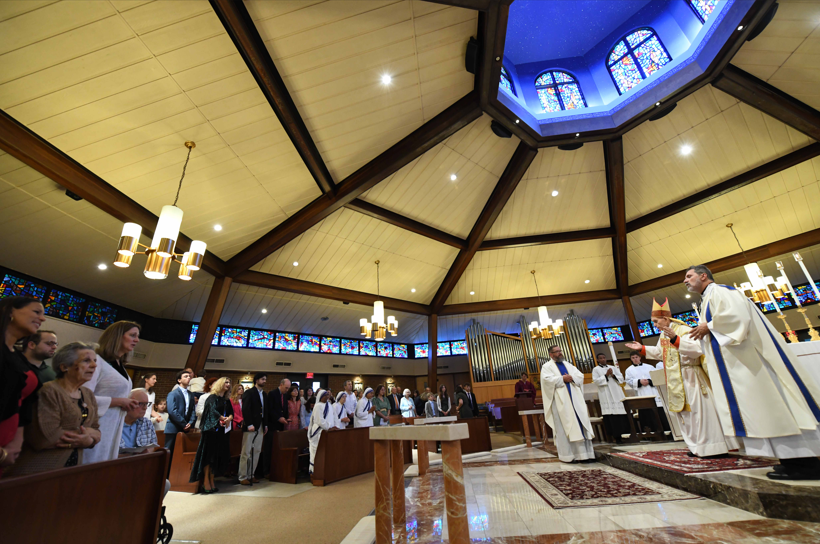
On August 1, 2026, Father Pjetër Popaj held a Mass and led prayers for Lisa’s soul at Our Lady of Shkodra Albanian Catholic Church, Hartsdale, New York.
During the service, my son, Florim Bajraktari, delivered remarks in Lisa’s memory on behalf of our family. He spoke about her devotion to her family, her love for America, her pride in her Albanian heritage, and her commitment to the Albanian-American community and Albanian causes.
When Florim finished speaking, those present responded with heartfelt applause. It was a deeply emotional moment for our family.
After the church service, we traveled to Washington Memorial Park Cemetery at Mount Sinai, Long Island of New York, where Lisa was laid to rest in the Bajraktari Family Garden. Father Robert Kuznik of St. James Catholic Church led the burial service and the final prayers.
That was the most difficult part of our farewell. But as we stood together for the final prayers, surrounded by relatives and friends, we felt once again that we were not carrying our sorrow alone.
Lisa wanted me to be strong for our family and to continue working for the United States of America and for the Albanian cause. That is exactly how I will honor her memory: by carrying forward the mission and the values she believed in.
May she rest in eternal peace. God bless her soul, and God bless all of you




Note to Readers:
Yes, in the TV program of Marin Mema (Sept. 27, 2020) all that is dislayed are Albanian/Arvanite folk costumes (costumes originally being with longer skirts/fustanella going up to the knee, covering the knee). What is happening in several “Greek” videos here in YouTube, is a blatant international intellectual and cultural property theft of the so called “Greeks” against Albania, Albanian culture and Albanian ancient and traditional costumes and dress.
It is a well-known fact that, this present-day “Greece”, since 1832 (when the Albanian/Arvanite War for Independence against Ottomans liberated the country), has been de-facto a colony of different and/or a consortium group of European countries (including United Kingdom), and ruled as a monarchy by a foreign monarch, as a head of state.
This lasted from 1832 until 1970-s, when the monarchy was overthrown in favor of a military junta government, followed by a civilian government in the later years.
Even Prince Philip, Duke of Edinburgh (husband of Queen Elizabeth II of United Kingdom), has been photographed in “Greece” (during the years when this “Greece” was a United Kingdom colony), in his childhood, dressed with an Albanian traditional costume with fustanella.
But the inscription in the said photo (that can be seen in the London Museum of Arts and History), falsely states: “Photo of Prince Philip as a child, dressed in Greek traditional consume”??!! There are no “Greek” costumes. There is no “Greek” country, the “Greek” ethnicity does not exist, and has never existed.
The place called Greece never existed before as we know it today. To learn more, read the article below, published by a group of renown US based scientists.
—————————————–
**** THE PLACE CALLED GREECE NEVER EXISTED BEFORE AS WE KNOW IT TODAY ******
The place called Greece never existed before as we know it today.
The people who live in the so called Greece today used to be called “Romej/Romaikos” during Byzantine Empire and “Raja” during Ottoman Empire times (except the Arvanites and Chams who used to be called always by their name like “Albani”, “Albanoi”, etc.) and the name “Greece” never existed during Byzantine times.
The people who live in the so called “Greece” today are NOT the descendants of ancient “Greece” (as the world history knows it – that civilization has been an Illyrian-Pelasgian civilization, intentionally misrepresented as “Greek” by con and planted “historians”).
Regarding the religious language used in the eastern part of the Roman Empire (an invented/made-up language by Roman religious administrators called Koine/”Greek”) – it fell out of use, and went extinct times ago (about 2000 yrs ago).
Same happened with the Latin language (an invented/made-up language as well, which was spoken in the western part of the Roman Empire) – it fell out of use and went extinct, and is rarely spoken nowadays, except in few and certain official religious ceremonies in Vatican and for international medical terminology only.
During Ottoman times in the Balkans, after the great powers pushed for an uprising in the place that today is called “Greece”, an independent country was formed during 1821-1832.
The majority of the population (around 92-95%) there was of Arvanites and Chameria (together with Albanian speaking regions of Follorina, Kosturi, Athens and Peloponez) stock.
The rest of the minority population (around 5%) was of Aromanian, Slav, Turks, and Roma stock.
The only language spoken up until 1821-1832, in the region that today is unjustly called “Greece”, was Albanian.
There were no “Greeks” whatsoever, they did not exist as ethnicity, population and language at all, up until 1821-1832 period in that region.
Albanians also were the backbone of the uprising for independence from the Ottoman Empire – with 100% of the all senior leading commanders of the uprising for independence during 1821-1832, being of Albanian stock (Arberoret/Arvanites and Chams).
The Arberor/Arvanite Republic was the initial nucleus independent country established in the Morea/Peloponnese region by 1821.
The first session of the first newly elected Parliament in 1832, of this so-called nowadays “Greece”, held its full Parliament proceedings in the Albanian language (“Greek/Koine” language did not exist back then in the region/area called “Greece” today).
What is appalling to the international community of scientists and historians, is that “Greek” government today has put a total ban on the access, research and publication of the archival documentations (classified as “top secret”) of the first Parliamentary session of 1832 in “Greece” – and this is a clear evidence that today, “Greek” government is trying by all and any means in its disposal to hide the historical truth about how this “Greece” of today it came about to be.
After the gain of independence, the region was divided, and with a prolonged civil war, therefore a united country could not be immediately established on the entire region.
Fearing the disintegration of the region after Ottomans left (and the possibility of a return of the Ottomans), and in order to dominate the said region, Prince Otto of Germany was installed in by European powers and Russian Empire, in order to clear the mess and initiate nation – building there.
He was proclaimed King of the region by great European powers and the Russian Empire of that time and given, at the same time, plenipotentiary powers to rule.
The Prince Otto royal family in Germany (Bavarian dynasty) happen to be an admirer of the ancient civilizations, one of them being the extinct ancient “Greek” civilization, traces and archeological findings of which are also seen in that region called today “Greece” as well.
Being an ancient history romantic and buff, “living in a bubble” and being completely out of touch with the realities of the Illyrian Peninsula at that time, Otto came up with the idea (in collusion also with the then Russian Empire and an anti-Christian dangerous religious cult in that region at that time – some self-proclaimed “Orthodox” Church), that the only way to keep the place together and for a chance to build a country there, was to adopt/impose some kind of neutral/foreign ancient language and culture for all people living in that place, that will make possible for the people to stick together under one language and culture imposed on them.
Therefore, with a special royal decree, Otto proclaimed a version of the ancient artificial “Greek”/Koine language (the easier one to be taught and learned by people there in those times) as an official language of the place, and also came up with the new name for the place, calling it with a special royal decree “Greece” (a name without any historical and factual meaning).
Everything else was banned, and the new “country” formed, was ordered to be rebuild anew in resemblance to the old romantic view of the ancient extinct “Greek” civilization, starting with the buildings, names of people, places, cities and villages, regions, mountains, fields and all were changed to made-up names borrowed from the ancient literature of an imaginary ancient “Greek” civilization.
This of course was accompanied with money brought in by European powers to rebuild. The more people in that region agreed with the change of their true national and ethnic identity and declared themselves artificially “Greeks/Hellenes” and adopted to the new order, the more money was to be pouring in.
Naturally, the strongest resistance to this artificial and made-up solution, was made by the Arvanites (who consider themselves to be pure Albanians at the same time – contrary to the today’s Greek governments laughable, nonsense, and desperate lying propaganda that falsely declares that “Arvanite of Greece speak Albanian but are not Albanians but Greeks”) and Chams, but at no avail.
It is legendary, the loss by one vote (the illegal vote of then French Ambassador) in the Price Otto’s rigged Parliament of that time, of Arvanite and Chams proposal to have the Albanian (Arvanite) language as an official language of the place called ‘Greece” today, and to name and call the new country “Arvanoi (Albania)” (instead of “Greece”).
There is overwhelming scientific and factual evidence, archival and historical documents, as well as studies and publications by major world-renowned authors and authorities in the field, about all of the above.
One interesting fact here, is that one of the earlier German/Austrian well known historians and scientists of that time, Fallmerayer, alerted Prince Otto and others to this nonsense, of declaring a whole people and place by a name not belonging to them (so experimenting with them as they were guinea pigs), and injecting an extinct artificial language, culture and civilization on people who had no idea about it and did not belong to it at all. Well, Fallmerayer may have proven to be right.
By the way, Fallmerayer, is a banned figure and historian by the dictatorial klepto-theocracy regime in what is called “Greece” today.
Through a thorough fact finding mission and field observations during the same time (of Prince Otto’s installation to power in the region called “Greece” today), another world-renowned German historian, subject-matter expert and scientist of that time, Prof. Hans Heidenauer, came to the conclusion and reported back to German royal authorities that – “there are no ‘Greeks’ whatsoever in the region, they don’t exist – there are only people and a population who speak a language called Arvanite/Albanian and the people call themselves Arvanites/Albanians”.
Another earlier government fact-finding mission about the Albanian inhabited regions in Europe, commissioned by Napoleon Bonaparte (Emperor of France) around the year 1800, confirmed that, Albanian regions extended from Mediterranean Sea and Peloponnese up to Dalmatia and Danube river, and eastward beyond Vardar (Dardhar) river bordering Aegean Sea.
By the way, Germany is still paying for the Otto’s racist and ignorance blunder, even today. It has gotten stuck with the country so called “Greece”. It is now forced to pour free money, even today, out of Germany’s pocket (through European Union as well) year after year to keep it alive and going, as this “Greece” cannot stand on its own.
It is an artificial creation of Prince Otto’s ill-conceived fantasy and the malevolent aims of then Russian Empire and the dangerous religious cult/sect called “Anadolli Orthodox” Church – a “zombie”, “fake”, “scam” and a “plagiarized” country so to speak, and the new generations of the Germans and Europeans are continuing to pay the price for it.
To illustrate, during its existence since 1832, this so-called country of “Greece” has changed twice its official language and three times its national flag, and has a mounting present-day debt of over 350 billion dollars to Germany and the European Union.
Moreover, what Prince Otto did back then, is tantamount to a silent ethnic cleansing by alteration (followed later on by mass murder, pogroms, holocaust, and ethnocide by succeeding “Greek” governments).
He forced inhabitants of a whole region/place (called “Greece” today) to change by force their culture, language, national and ethnic identity to something else that those people were not, so they could artificially change in order to look modern and civilized (like artificial ancient “Greeks” in Otto’s personal view) and possibly be united.
And of course, Arvanites and Chams (as the majority population in the region) suffered mostly from this ethnic cleansing – which was later on followed even with mass killings, ethnocide, holocaust, and mass expulsions of Arvanites and Chams (who refused to change and trade their Arvanite/Albanian language for a Koine “zombie” language), by zombie and dwarf “Greek” governments and regimes that followed into the 20th century.
Albanians are the descendants of Pelasgians and Illyrians (since 10,000 years and more ago).
Alexander the Great -was a Pelasgian King of Illyrian/Pelasgian Confederation of Macedonia, falsely presented as “Greek” by con and “planted” historians.
The Trojan War – was a war between Pelasgians and Illyrians – both ancient Albanian kingdoms/confederations, falsely represented as “Greek” by con and planted “historians”.
Homer’s “Iliad and Odyssey” epic poems are Pelasgian era poems – falsely represented as “Greek” by con and planted “historians”.
The Thermopylae Battle – was a battle between Pelasgian army (Sparta – a Pelasgian city) and Persian army, falsely represented as “Greek” battle against Persians by con and planted “historians”.
All this revelation, informs another major and mission critical nodal point: history taught about what is called “Greece” today, it appears to be taught wrong.
People are wrongly taught in schools that today’s “Greece” and its people are the direct descendants of “ancient Greeks”.
“Greece and Greeks” of today, to some extent, also falsely think they are superior to others just because they are called “Greeks” and their country “Greece” by decree (not by the virtue of the truth).
They also seem to falsely believe for some reason, they are entitled to the German and European money being handed out to them – as, it seems, they are unable to create any value-added contribution to the European economy, culture, art, business, science and technology.
“Greece” of today consists, in other words, of a dictatorial klepto-theocratic Nazi regime on low budget, or a Nazi regime on steroid injections by Germany, Russia and BE.
The school textbooks and historiography should change, telling people the truth as it is.
And with this, will come many other changes, in the way we see relations with the country called “Greece” today.
Shkencëtarët e Rinj Shqiptaro-Amerikanë
(Young Albanian-American Scientists)
New York, Qershor 2018
(June 2018) ======================================================================