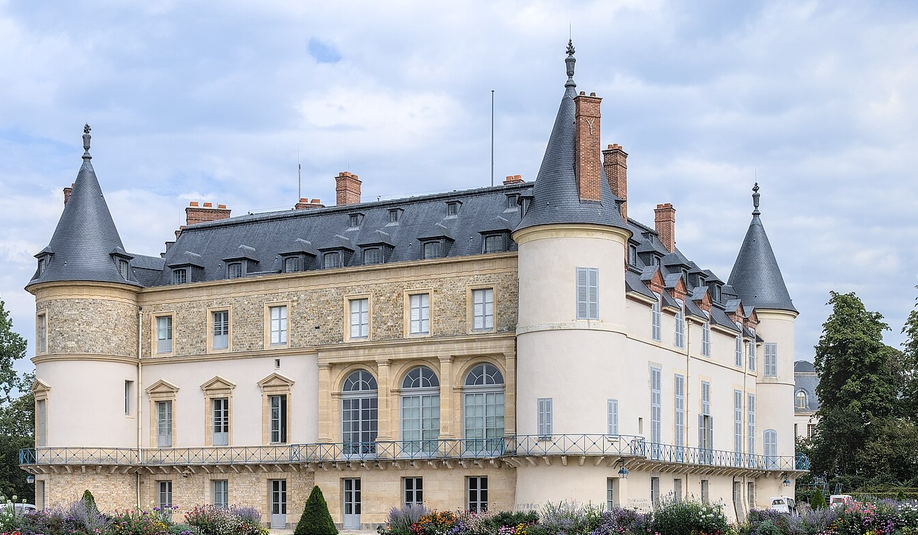
The Rambouillet Conference was an international diplomatic conference held between 6 February and 22 March 1999 at the Château de Rambouillet, France, in an attempt to resolve the Kosovo crisis. The talks resulted in the drafting of a proposed Interim Agreement for Peace and Self-Government in Kosovo (Rambouillet Agreement), between the Federal Republic of Yugoslavia and the Republic of Serbia on the one hand and the delegation of political representatives of the ethnic Albanian majority population of Kosovo on the other. Among other things, the proposed agreement called for substantial autonomy for Kosovo; the deployment of up to 30,000 NATO peacekeeping troops in Kosovo; an unhindered right of passage for NATO troops on Yugoslav territory; and immunity for NATO and its agents to Yugoslav law.[1] The Kosovo Albanian side signed the agreement on 18 March 1999, however the refusal of the Yugoslav and Serbian side to sign the accords led to the 1999 bombing of Yugoslavia.[2]
Interim Agreement for Peace and Self-Government in Kosovo
The provisions of the proposed agreement included:[1]
- “Kosovo will have a president, prime minister, and government, an assembly, its own Supreme Court, constitutional court and other courts.”
- “Kosovo will have the authority to make laws not subject to revision by Serbia or the Federal Republic of Yugoslavia, including levying taxes, instituting programs of economic, scientific, technological, regional and social development, conducting foreign relations within its area of responsibility in the same manner as a Republic.”
- “Yugoslav army forces and Serb security forces will withdraw completely from Kosovo, except for a limited border guard force (active only within a 5 kilometer border zone).”
- “The parties invite NATO to deploy a military force (KFOR), which will be authorized to use necessary force to ensure compliance with the accords.”
- “The international community will play a role in ensuring that these provisions are carried out through a Civilian Implementation Mission (CIM) appointed by NATO”.
- “The Chief of the CIM has the authority to issue binding directives to the Parties on all important matters he sees fit, including appointing and removing officials and curtailing institutions.”
- “Three years after the implementation of the Accords, an international meeting will be convened to determine a mechanism for a final settlement for Kosovo on the basis of the will of its People.”
- “NATO personnel shall enjoy, together with their vehicles, vessels, aircraft, and equipment, free and unrestricted passage and unimpeded access throughout the Federal Republic of Yugoslavia including associated airspace and territorial waters. This shall include, but not be limited to, the right of bivouac, maneuver, billet and utilization of any areas or facilities as required for support, training, and operations.”
- “NATO is granted the use of airports roads, rails, and ports without payment of fees, duties, dues, tolls, or charges occasioned by mere use.”
- “Yugoslavia and Kosovo shall, upon simple request, grant all telecommunications services, including broadcast services, needed for the Operation, as determined by NATO, This shall include the right to utilize such means and services as required to assure full ability to communicate and the right to use all of the electromagnetic spectrum for this purpose, free of cost.”
- “In the conduct of the Operation, NATO may need to make improvements or modifications to certain infrastructure in the FRY, such as roads, bridges, tunnels, buildings, and utility systems.”
- “NATO shall be immune from all legal process, whether civil, administrative, or criminal.”
- “NATO personnel, under all circumstances and at all times, shall be immune from the Parties, jurisdiction in respect of any civil, administrative, criminal or disciplinary offenses which may be committed by them in the FRY.”
- “NATO personnel shall be immune from any form of arrest, investigation, or detention by the authorities in the FRY.”
Proposed autonomy for Kosovo
The Rambouillet Agreement included a constitution creating a system of democratic self-governance for Kosovo within the Federal Republic of Yugoslavia. It would have established executive, legislative and judicial branches of government, a system of local government and law enforcement institutions.
Federal Republic of Yugoslavia and Republic of Serbia
The Federal Republic of Yugoslavia would have competency over territorial integrity, maintaining a common market, monetary policy, defense, foreign policy, customs services, federal taxation, and federal elections. The federal government would maintain border crossings at Kosovo’s external borders with Albania and North Macedonia and would exercise authority in connection with the enforcement of federal immigration laws.
The Republic of Serbia would have competence in relation to republic level elections in Kosovo.
Kosovo would be entitled to at least 10 seats in the federal parliament and at least 20 seats in the Serbian parliament.[3] Kosovo would be entitled to at least one minister in the federal government, one minister in the government of Serbia, one judge in the federal constitutional court, one in the federal court and three judges in the supreme court of Serbia.
Kosovo would have competency over all matters not reserved to the Federal Republic of Yugoslavia and the Republic of Serbia.
The institutions of Kosovo would be able to make laws in areas they have competency and would be able to levy taxes, and institute programs for economic, scientific, technological, regional and social development.
Kosovo would be able to conduct foreign relations within its areas of competency including the right to maintain relations with foreign states, establish missions abroad, and join international organisations.
The Rambouillet Agreement proposed the establishment of executive, legislative and judicial organs in Kosovo.
Kosovo was to have an 120 member assembly of which 80 would be directly elected. Of the remaining 40 members, 10 would be elected by communities representing between 0.5 and 5% and 30 would be shared equally between the Albanian and Serb communities. The assembly would be led by a president, two vice-presidents.[4]
Kosovo would have had a president elected by the assembly for a three year term renewable once. Executive power would be exercised by a government led by a prime minister, proposed by the president and confirmed by the assembly.[4]
Kosovo was to have a constitutional court, a supreme court, district courts, and communal courts. The constitutional court and supreme court would each have 9 judges. An office of the prosecutor, led by a chief prosecutor, would be responsible for prosecuting individuals who violate the criminal laws of Kosovo. With the exception of immigration and customs related crimes, any person arrested within Kosovo would subject to the jurisdiction of the Kosovo courts. The rights and freedoms set forth in the European Convention on Human Rights would apply directly in Kosovo. An ombudsman institution would be established to protect human and community rights in Kosovo.[4]
Kosovo’s existing communes would continue to exist and would elect their own municipal assemblies and executive councils.
Communal police units would be established throughout Kosovo with responsibility police patrols, crime prevention, criminal investigations, arrest and detention of criminal suspects, crowd control, and traffic control. Communal police officers may be equipped with a sidearm, handcuffs, a baton, and, a radio and would be required to wear a badge, picture identification, and name tag. Each unit would be led by a communal commander, appointed by the local communal assembly. A criminal justice administration would be established to coordinate law enforcement operations across Kosovo.[4]
The Rambouillet Agreement authorised the deployment of a 30,000 strong NATO-led multi-national military implementation force into Kosovo.[1] (Wikipedia)

 NJË PAPA, KATËR LEBËR DHE DY VENDAS- Tregim nga SHKËLQIM HAJNO
 Pa udhëheqje dhe program, protestat nuk e tronditin pushtetin e Edi Ramës- Nga Arif Ejupi
 Gjenevë — Tempull i Paqes dhe Humanizmit- Nga ARIF EJUPI
 Albin Kurti pret nga opozita propozimin për presidentin konsensual Nga Elida Buçpapaj
 Mitologjia e “Gjyqit të kafes” dhe dështimi i dekomunistizimit Nga Agron Tufa
 HOROSKOPI E MARTË 18 GUSHT 2026
 Nga Italia drejt Shqipërisë, tri veliera me aktivistë në mbështetje të “Revolucionit të Flamingove”, solidaritet me protestat qytetare kundër Ramës
 Nëse Thaçi shpallet i pafajshëm, a lirohet menjëherë?
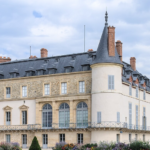 Rambouillet conference- Interim Agreement for Peace and Self-Government in Kosovo
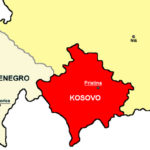 Kosovo: Interim Agreement (Rambouillet Agreement)
 Senatori Bob Dole e ftoi Hashim Thaçin më 5 Mars 1999 – Thaçi nuk ishte i pranishëm në Shkup – por më 7 Mars 1999 e sigurt se Hashim Thaçi ishte në Tiranë
 Ishte në Tiranë apo në malet e Kosovës Hashim Thaçi kur e ftoi në takim në Shkup Senatori Dole – Arkiv 5 Mars 1999 Ish-Senatori Amerikan Bob Dole më 5 Mars 1999 takim me delegacionin e Kosovës ku mungon Hashim Thaçi