From regional initiatives with limited impact towards strategic projects based on shared European interests
Vlorë–Otranto: A New Road and Railway Corridor Connecting the Balkans with Italy and Western Europe
INTRODUCTION
THE BALKANS CANNOT ACHIEVE INTEGRATION THROUGH NEW FORMS OF POLITICAL DEPENDENCY
The Western Balkans need regional cooperation more than ever. But the fundamental question is not whether countries should cooperate, but on what principles this cooperation should be built, who benefits from it, and what concrete changes it brings to the economic lives of citizens.
For more than three decades, the region has been confronted with numerous political initiatives, joint declarations, cooperation agreements and promises of economic integration. Nevertheless, the gap between political declarations and actual economic development remains substantial.
Initiatives such as the Balkan Mini-Schengen and, later, Open Balkan were presented as mechanisms for bringing countries in the region closer together and facilitating the movement of people, goods, capital and services. In principle, these objectives are reasonable and necessary. No one can oppose the facilitation of trade or the removal of administrative barriers between neighbouring countries.
However, the problem begins precisely when an initiative presented as a regional economic project acquires political dimensions and ambitions without first establishing the conditions of equality, trust and participation of all states.
The Balkans do not need a new model of integration that, instead of promoting equal cooperation, risks reproducing old relationships of influence and dependency.
The region does not need to simply change the names of its initiatives while preserving the same structural problems. It needs a new philosophy of cooperation, in which the political power, economic size or geographical position of one state does not determine its role and influence over other states.
This is precisely where the debate on Mini-Schengen and Open Balkan must take place.
1. MINI-SCHENGEN AND OPEN BALKAN: WHEN ECONOMIC INTEGRATION RISKS BECOMING A POLITICAL PROJECT
The Mini-Schengen initiative, introduced in 2019 by Albania, Serbia and North Macedonia and later known as Open Balkan, was promoted as a mechanism for creating a more integrated economic space in the Western Balkans.
At first glance, the idea appeared attractive: freer movement of citizens, easier trade, mutual recognition of documents, customs cooperation and the reduction of administrative barriers.
However, a project that claims to represent regional integration must fulfil one fundamental condition: it must be inclusive and guarantee genuine equality among its participants.
Open Balkan failed to meet this condition.
Kosovo, Montenegro and Bosnia and Herzegovina did not join the initiative. This was not merely a formal issue, but a fundamental political and institutional weakness of the project.
How can one speak of the integration of the Western Balkans when a regional initiative is established without the participation of several states belonging to the region?
How can the creation of a common economic space be claimed when there is no broad political and institutional consensus?
And, above all, can regional integration be sustainable when states do not share the same level of trust and do not feel equally represented in the decision-making process?
These are questions that cannot be avoided by arguing that the initiative concerns economic cooperation alone.
The problem does not lie in the idea of cooperation between Albania, Serbia or North Macedonia. The problem lies in the way an initiative claiming to have a regional character is structured and governed.
In particular, the political and economic role that Serbia seeks to assume in the region, as well as perceptions of Belgrade’s ambitions for dominance, create legitimate grounds for debate and reservations.
Serbia is the largest economy among the Western Balkan countries and has considerable political, industrial and commercial weight. However, this position must not become a privilege that allows it to determine the direction of regional integration.
No state can assume the role of the political centre of the Balkans while the others are treated primarily as economic spaces expected to adapt to its interests.
Regional cooperation cannot be built on political hierarchies, but on the sovereign equality of states.
Furthermore, relations between Kosovo and Serbia continue to be characterised by deep political disagreements and an unfinished normalisation process. Under these circumstances, every regional project must be based on respect for Kosovo’s statehood and on equal relations between the parties.
Economic integration cannot be demanded while fundamental political problems that undermine trust are ignored.
Integration cannot serve as a substitute for political equality, nor as a cover for one state’s dominant influence over others.
Another problem: integration is not measured solely by the movement of goods
Facilitating the movement of goods is important, but it does not, in itself, constitute economic development.
An economy does not become more competitive simply because trucks cross borders faster. It becomes more competitive when it has modern railways, functional ports, motorways, logistics centres, reliable energy supplies and direct connections to international markets.
If a country continues to have poor infrastructure, a lack of investment and dependence on other countries’ transport corridors, administrative facilitation does not fundamentally change its economic position.
For this reason, Open Balkan should not be treated as the final destination of regional integration.
Economic cooperation must go far beyond agreements on border crossings. It must create shared assets, common infrastructure and new development opportunities for all states.
2. THE BALKANS NEED A DIFFERENT MODEL OF COOPERATION
The alternative to limited political integration is not national isolation.
On the contrary, it is cooperation that is more ambitious, more inclusive and more firmly oriented towards economic development.
The Western Balkans must build a model in which every state participates as an equal partner, regardless of the size of its territory, population or economic strength.
This model must be based on several fundamental principles:
Full equality among states in decision-making.
Respect for sovereignty and statehood.
Transparency in investments and the distribution of benefits.
Concrete infrastructure and economic projects.
Openness to cooperation with the European Union and international partners.
Opportunities for participation for all countries in the region, without political exclusions.
Instead of creating new mechanisms that could generate competition for political influence, existing European mechanisms should be strengthened, particularly the Berlin Process.
Since 2014, the Berlin Process has established a framework for cooperation between the six Western Balkan countries and their European partners.
It has one important advantage: it includes all the countries of the region and is based on the European integration perspective.
However, the Berlin Process must also move into a more concrete phase.
It is not enough to speak about a common regional market, free movement and economic cooperation. Projects must be built that create new physical connections, open markets and transform the economic position of the region.
The Balkans must move from the integration of declarations towards the integration of infrastructure, economies and shared interests.
3. VLORË–OTRANTO: A NEW STRATEGIC CONNECTION BETWEEN THE BALKANS AND ITALY
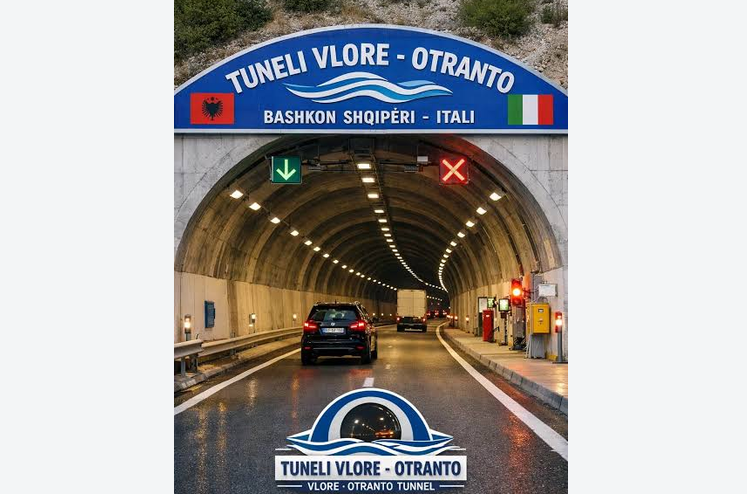
One of the projects capable of giving new substance to this vision is the idea of a permanent underwater infrastructure connection between Vlorë and Otranto.
This connection would create a new opportunity to link the Western Balkans with Italy and, through Italy, with the economic and transport networks of Western Europe.
The idea should not be viewed simply as the construction of a tunnel beneath the Adriatic, but as the creation of a new strategic road and railway corridor.
Such a project could include:
Underground road transport connections.
A dedicated railway tunnel.
Modern passenger and freight transport.
Integration with ports, logistics terminals and industrial centres.
Connections with national and European transport networks.
In this way, the Adriatic would no longer be merely a maritime space between two shores, but a new connecting space between Southeastern Europe and Italy.
For Albania, this would create new opportunities for infrastructure development and strengthen its position as a transport hub between the Balkans and Europe.
For Italy, it would establish a new connection with the markets of the Western Balkans and Southeastern Europe.
For Kosovo, it would open a new perspective for accessing Italian and European markets through Albania.
But the significance of this project does not end with these three countries.
It must be conceived as part of a broader regional economic network from which all Balkan countries can benefit.
4. CORRIDOR VIII: THE AXIS CONNECTING THE ADRIATIC WITH THE BLACK SEA
Such a project becomes even more significant when considered in relation to Corridor VIII.
Corridor VIII represents one of the strategic east–west transport axes, connecting the Adriatic region with Bulgaria and the Black Sea through Albania and North Macedonia.
Its importance was reaffirmed in the joint declaration adopted by Albania, Italy, North Macedonia, Bulgaria and Romania in Tirana on 18 February 2026.
This development demonstrates that cooperation between states can be based on concrete infrastructure interests without the need to create new political structures with regional ambitions.
Corridor VIII and the Vlorë–Otranto connection could function as two complementary parts of a shared vision.
One would strengthen the Balkans’ connection with Italy and the Adriatic, while the other would extend this connectivity towards North Macedonia, Bulgaria and the Black Sea.
Kosovo could become integrated into this network through infrastructure connections with Albania and North Macedonia.
Montenegro and Bosnia and Herzegovina could benefit from the development of Adriatic connections and their integration into regional networks.
Other countries in the region could strengthen their links with European corridors and neighbouring states.
Romania and Bulgaria could strengthen their connections with the Adriatic and Italy.
This is precisely the logic that should guide regional integration: not the creation of a political centre with a circle of states around it, but the construction of a network in which every country has the opportunity to connect its economy with those of others.
5. AN INCLUSIVE PROJECT, WITHOUT EXCLUSIONS AND WITHOUT POLITICAL DOMINATION
One of the fundamental principles of sustainable regional integration must be inclusiveness. No Balkan state should be excluded from opportunities for economic cooperation and joint development because of political differences, national interests or bilateral relations.
The Vlorë–Otranto project, interconnected with Corridor VIII, should be conceived as an open strategic corridor in which all countries of the region can identify their interests and opportunities for participation.
The essence of this vision is neither the creation of a new political bloc nor the establishment of a mechanism through which one state can exert influence over others. It is the creation of an economic and infrastructure network in which each state contributes according to its capabilities and benefits on the basis of shared interests.
Such cooperation must be founded on sovereign equality, institutional transparency, joint decision-making and respect for the interests of all participating countries.
No state should enjoy a privileged position in determining the priorities, direction or benefits of joint projects. Economic size, political weight or geographical position must not become instruments of domination.
Participation must remain open to all countries in the region, based on equal and clearly defined criteria. Each country must have the opportunity to contribute, invest and benefit from the development of shared infrastructure.
This is the path towards genuine integration: not through the creation of new centres of political influence, but through the development of economic interests that connect states on an equal and long-term basis.
A corridor that creates opportunities for everyone is far more valuable than an initiative that brings together only a few states around a limited political agenda.
6. COOPERATION WITH EUROPE, JAPAN AND CHINA: INTERNATIONAL COMPETITION, NOT DEPENDENCE ON A SINGLE PARTNER
A project of this scale requires cooperation with the most specialised international companies and institutions.
Europe, Japan and China possess significant technological capabilities and experience in implementing major infrastructure projects.
Therefore, the assessment of opportunities for implementing the project must be based on international competition, transparency and clearly defined technical and financial criteria.
No partner should be favoured in advance before the actual possibilities have been assessed.
The interests of the participating states must be quality, safety, economic sustainability and long-term benefits.
International cooperation must remain open, while strategic decision-making must remain in the hands of the participating states and their institutions.
7. FINANCING: A STRATEGIC INVESTMENT WITH EUROPEAN AND INTERNATIONAL SUPPORT
Such a project cannot rely solely on national budgets.
It must be treated as a project of international interest, with financing opportunities through European infrastructure funding mechanisms, international financial institutions and private capital.
The European Union could become an important partner through strategic infrastructure financing instruments such as the Connecting Europe Facility and the Western Balkans Investment Framework.
The European Investment Bank, the EBRD and other financial institutions could examine opportunities for long-term loans, guarantees and other financial instruments.
Italy and Albania would have a direct role in developing the Vlorë–Otranto connection, while Kosovo and other states could participate in developing connecting infrastructure and in joint cooperation mechanisms.
Financial participation must be determined transparently and in accordance with the capacities and benefits of each state.
The fundamental principle must be that no country carries a disproportionate burden and no partner receives unfair benefits.
8. KOSOVO AND ALBANIA: FROM GEOGRAPHICAL PROXIMITY TO REAL ECONOMIC INTEGRATION
For Kosovo and Albania, this vision has particular importance.
Geographical proximity, historical ties and economic relations are not sufficient if they are not accompanied by modern infrastructure and direct transport connections.
Kosovo, as a landlocked country, has a strategic interest in having more alternatives for accessing international markets.
A developed railway and road connection through Albania would create new opportunities for Kosovo’s exports, industrial transport, the development of logistics centres and the attraction of investment.
Albania, in turn, would be able to strengthen its position as Kosovo’s infrastructure gateway to the Adriatic and Italy.
However, this cooperation should not be limited to bilateral relations.
It must form part of a broader regional vision in which other countries also benefit from infrastructure development and the creation of new economic opportunities.
In this way, cooperation between Kosovo and Albania would not be a closed project, but a contribution to the economic integration of the entire Balkans.
9. THE BALKANS MUST MOVE FROM POLITICAL COMPETITION TO COMPETITION FOR DEVELOPMENT
One of the region’s greatest problems is that many initiatives continue to be viewed through the lens of political rivalries, international influence and the short-term interests of governments.
Meanwhile, citizens need jobs, investment, cheaper transport, better connections and economic prospects.
Instead of competing over which state will exercise greater political influence in the region, countries should compete over who can build better infrastructure, attract more investment and create more opportunities for their citizens.
A shared transport system would create economic interests for all parties.
A new connection between Albania and Italy would also benefit from the movement of goods from Kosovo, North Macedonia and other countries.
The development of Corridor VIII would strengthen trade between the Adriatic and the Black Sea.
Connections with ports, railways and industrial centres would create new opportunities for the economies of all participating countries.
This is the logic of integration that generates shared value.
One country does not need to lose for another to gain. On the contrary, the development of a corridor can create new opportunities for the entire economic network.
10. FROM AN IDEA TO A SHARED EUROPEAN AGENDA
To transform this vision into a serious subject of political and economic debate, Albania, Italy and Kosovo could take the initiative to open an intergovernmental discussion process, while inviting other interested countries in the region to participate.
This process should aim to:
Address the Vlorë–Otranto connection as a strategic international project.
Link it with the development of Corridor VIII.
Ensure the participation of all interested countries in the Balkans.
Involve European institutions and international partners.
Establish a transparent mechanism for cooperation and decision-making.
Undertake a professional assessment of the project’s implementation possibilities.
In subsequent phases, experts and the relevant institutions would need to determine the technical, economic, environmental and financial aspects.
But before all of these comes a political question: is there a willingness among the countries of the region to cooperate on a major project in which each country is an equal partner?
This would be a concrete test of the political maturity of the Balkans.
CONCLUSION
THE BALKANS DO NOT NEED NEW CENTRES OF INFLUENCE, BUT NEW CONNECTIONS FOR DEVELOPMENT
The experience of recent years has shown that regional cooperation cannot be built solely on political declarations, administrative agreements and initiatives that do not enjoy the support of all states.
Mini-Schengen and Open Balkan failed to create an inclusive model of regional integration. Problems of participation, a lack of trust and concerns about the concentration of political and economic influence demonstrate that the region needs a different approach.
Criticism of these initiatives is not criticism of cooperation with any country in the region. On the contrary, it is a call for cooperation that is fairer, more transparent and more sustainable.
All Balkan countries have a place in the region’s economic future. But this cooperation must be built on partnership and equality, not on claims to a dominant role.
An integrated Balkans cannot be one in which a single state determines the direction while the others adapt. It must be a space in which all states participate in decision-making and benefit from shared development.
The Vlorë–Otranto connection and the development of Corridor VIII represent an opportunity to turn this vision into reality.
They could become symbols of a new philosophy of cooperation: from competition for political influence towards competition for economic development; from limited agreements towards strategic projects; from mutual political dependencies towards economic interdependence based on reciprocal interests.
Europe needs a Balkans that is better connected, more developed and more sustainable. The Balkans, in turn, needs projects that bring it genuinely closer to Europe.
Perhaps the time has come for the success of regional integration to be measured no longer by the number of meetings and political agreements, but by the kilometres of railway built, new corridors opened, investments delivered and economic opportunities created for citizens.
The Balkans does not need a political Mini-Schengen, nor an Open Balkan built around the influence of a single centre. It needs a Balkans that is open to Europe, but built on the equality of states, sovereignty, transparency and mutual interest.
Less politics of domination, more economic cooperation. Fewer declarations, more projects. Fewer divisions, more bridges.
FOOTNOTES AND BIBLIOGRAPHICAL SOURCES
[1] Radio Free Europe / Radio Liberty (RFE/RL), Maja Leđenac and Norbert Šinković, “Vučić, Zaev i Rama potpisali deklaraciju o slobodnom protoku robe i ljudi”, 10 October 2019, Novi Sad. Report on the establishment of the Mini-Schengen initiative and the joint declaration of Albania, Serbia and North Macedonia.
[2] Radio Free Europe / Radio Liberty (RFE/RL), “Novi izazovi donedavnog ‘Mini Šengena’”, July 2021. Analysis of the development of the initiative and its transition into the Open Balkan format.
[3] Berlin Process, “Final Declaration by the Chair of the Conference on the Western Balkans”, Berlin, 28 August 2014. Founding document of the Berlin Process, particularly the section on regional cooperation and European integration.
[4] Regional Cooperation Council (RCC), “Common Regional Market Action Plan 2025–2028”, adopted on 14 October 2024, Berlin. Strategic document concerning the second phase of the Common Regional Market in the Western Balkans, 2025–2028.
[5] European Commission, “Trans-European Transport Network (TEN-T)”. Institutional documentation concerning the European transport network, its main corridors and infrastructure connectivity between European countries.
[6] Ministry for Europe and Foreign Affairs of the Republic of Albania, “Tirana Joint Declaration on Corridor VIII”, Tirana, 18 February 2026. Joint declaration by the foreign ministers of Albania, Italy, North Macedonia, Bulgaria and Romania on the strategic importance of Corridor VIII.
[7] European Parliament and Council of the European Union, Regulation (EU) 2021/1153 of 7 July 2021, establishing the Connecting Europe Facility (CEF). Official Journal of the European Union, L 249, 14 July 2021, pp. 38–81.
[8] Western Balkans Investment Framework (WBIF), institutional documentation on the financing, preparation and implementation of strategic infrastructure projects in the Western Balkans.
[9] European Investment Bank (EIB), institutional documentation on the financing of transport projects, strategic infrastructure and European connectivity.
[10] European Bank for Reconstruction and Development (EBRD), documentation and reports on infrastructure investment, economic development and regional connectivity in the Western Balkans.
[11] European Commission, Directorate-General for Mobility and Transport, “Cross-Border Infrastructure Projects – Fehmarnbelt Fixed Link”, technical and financial documentation on the fixed railway and road connection between Denmark and Germany, 2017. The project envisages an approximately 18–19-kilometre underwater tunnel, incorporating an electric railway and motorway.
[12] China Communications Construction Company (CCCC), “Concrete Casting of Final Joint of Shenzhen-Zhongshan Link’s Subsea Tunnel Completed”, 14 March 2023. Technical documentation on the 6.8-kilometre underwater tunnel incorporating eight traffic lanes.
[13] Yari, Sadegh; Kovačević, Vedrana; Cardin, Vanessa; Gačić, Miroslav; Bryden, Harry L., “Direct Estimate of Water, Heat, and Salt Transport Through the Strait of Otranto”, Journal of Geophysical Research: Oceans, Vol. 117, Issue C9, 6 September 2012, Article C09009, DOI: 10.1029/2012JC007936. Scientific study on the oceanographic characteristics and the exchange of water masses in the Strait of Otranto.
Prishtina,09.11.2026

 Keda Kaceli: Iu luta Papa Leo XIV të bekojë rininë shqiptare kundër kesaj të keqeje antishqiptare që ka zaptuar jetën e bashkëkombësave tanë! Intervistoi Elida Buçpapaj
 Gazetari i huaj zbulon ku fshihet Rama gjatë protestave rinore: Në një vilë të kuqe betoni me shumë roje
 Të njoh mirë kush je- Poezi nga Elida Buçpapaj
 “Të ndihen të llastuar si në hotel”- Zbulohen kërkesat e pazakonta të Ballukut për vilën në Palasë: Nga pishina infinity te vaskat me hidromasazh si në Santorini
 Çfarë jete kjo e avokatit! Nga Av Dorian Matlija
 EVROPA PËRGATITET PËR 72 ORËT E KRIZËS: A ËSHTË KOSOVA GATI NËSE NDËRPRITET JETA NORMALE? – Nga Isuf B.Bajrami
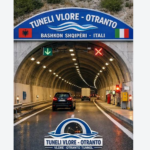 THE BALKANS NEED JOINT PROJECTS, NOT POLITICAL INTEGRATION WITHOUT AN ECONOMIC FOUNDATION- By Isuf B.Bajrami
 Emrat e tyre dolën në dosjen e Belinda Ballukut, Maksim Et’hemaj largohet nga drejtimi i Aviacionit Civil! Dorëhiqet edhe Viola Haxhiademi nga drejtimi i KESH
 Letra e plotë- Veliaj kërkesë Sekretarit të Përgjithshëm të PS dhe SPAK-ut për të marrë pjesë në Asamblenë e PS-së: Privimi nga liria nuk duhet të shndërrohet në përjashtim nga jeta politike
 Protestat kundër qeverisë dhe korrupsionit- Media italiane: “Albanian Files” iu kthye Ramës në bumerang politik
 Agatha Christie: Një botë misteresh, një udhëtim i jashtëzakonshëm në jetën e mbretëreshës së krimit