July 27, 2026
For nearly three decades, Kosovo has represented one of America’s clearest bipartisan foreign-policy successes. NATO’s intervention in 1999 ended a campaign of ethnic cleansing, while sustained American leadership helped build one of Europe’s most pro-American democracies. Few nations have embraced the United States with greater conviction or gratitude.
Today, however, that success is increasingly at risk—not because Kosovo has abandoned the West, but because Washington risks underestimating the strategic consequences of Serbia’s growing alignment with America’s principal geopolitical rivals.
The warning signs are becoming impossible to ignore!
This week, Rep. Joe Wilson (R-S.C.), joined by dozens of Democratic and Republican colleagues, introduced House Resolution 1451, urging that the 2027 session of the OSCE Parliamentary Assembly not be held in Belgrade. Their reasoning extends beyond logistics. The resolution reflects growing bipartisan concern that Serbia has become an increasingly reliable partner of Russia, China and, more recently, Iran—hardly the profile of a government that should host one of Europe’s leading democratic institutions.
That concern deserves serious attention.
For years, many observers in the Balkans have warned that Serbia has become what I have called “the Little Russia of the Balkans”—a state that publicly professes European aspirations while simultaneously deepens strategic relationships with authoritarian powers opposed to the United States and its allies.
Russia has long relied on Serbia to obstruct Euro-Atlantic integration in the Western Balkans and to amplify Kremlin narratives throughout southeastern Europe. China has transformed Serbia into its principal regional partner, investing heavily in surveillance technology, critical infrastructure and military cooperation.
Now, Iran is quietly emerging as another relationship worth watching, adding yet another dimension to Serbia’s increasingly diversified partnerships with governments hostile to American interests.
Just as troubling is the rhetoric emanating from within Serbia itself.
Recently, Serbian Minister Snezana Paunović declared that, had she been Slobodan Milošević in 1998, she would have ethnically cleansed Kosovo. Such a statement would be shocking from any public official. Coming from a sitting government minister in a country seeking closer relations with Washington and Brussels, it should set off alarm bells throughout the transatlantic alliance.
These are not merely offensive remarks. They reveal that the ideology which fueled Europe’s worst atrocities since World War II has not disappeared entirely from Serbia’s political mainstream.
Against this backdrop, Washington’s recent diplomatic friction with Kosovo becomes even more concerning. American officials have legitimate disagreements with Kosovo’s government over tactical and procedural issues. Friends can and should disagree. But strategic disagreements with Kosovo should never obscure the larger strategic reality.
Kosovo remains one of America’s most dependable democratic partners in Europe. Serbia does not. Kosovo also remains the most pro-American country in Europe.
There is an important difference between managing disagreements with an ally and unintentionally weakening that ally while seeking accommodation with a government whose strategic orientation increasingly diverges from Western interests.
Reports that Washington is considering reducing the U.S. military presence within NATO’s Kosovo Force (KFOR) therefore deserve careful reconsideration. Even if motivated by broader force-posture priorities, such a move would inevitably be interpreted by Moscow, Beijing and Tehran as a retreat from one of America’s most successful post-Cold War security commitments.
The Western Balkans are not a peripheral theater.
They are an increasingly contested front in the global competition between democratic and authoritarian powers. Russia seeks instability. China seeks influence. Iran seeks new openings wherever Western resolve appears uncertain.
Kosovo, by contrast, seeks deeper integration with NATO, stronger partnerships with the United States and greater contributions to regional security. It does not aspire to remain merely a consumer of Western security guarantees; it seeks to become a provider of security alongside its democratic allies.
That is precisely the kind of partner American foreign policy should strengthen. This is not an argument against engaging Serbia. The United States should maintain dialogue with every government in the region. But engagement must never come at the expense of strategic clarity.
Washington should recognize the difference between a difficult ally committed to democratic institutions and an increasingly authoritarian partner maintaining close political, military and economic ties with America’s principal adversaries.
The United States invested enormous political capital, military resources and moral leadership to secure Kosovo’s freedom. Allowing that achievement to erode through strategic complacency would not simply undermine Kosovo. It would signal to allies around the world that America’s greatest foreign-policy successes can gradually be abandoned when geopolitical attention shifts elsewhere.
History rarely announces its turning points in advance. The Western Balkans may well be approaching one. American leadership prevented catastrophe there once before. It should not wait for another crisis before recognizing what is again at stake.
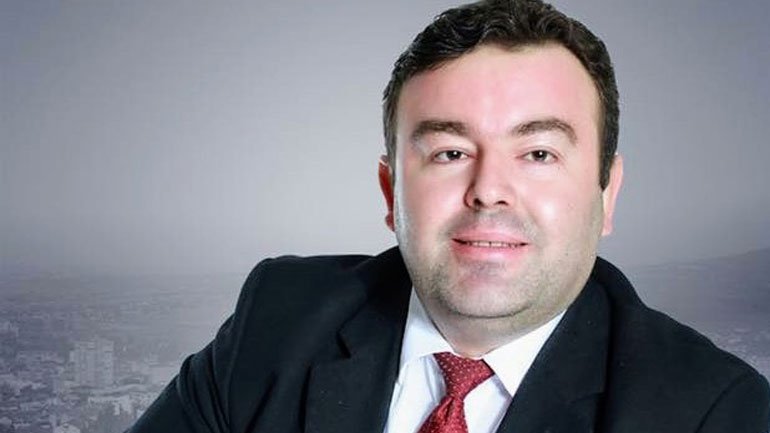
Faton Tony Bislimi is a former Member of Parliament of Kosovo and has spent more than two decades actively advocating for closer US-Kosovo relations in Washington, DC, working with foreign policy leaders on Capitol Hill from both sides of the aisle.

 KARAFILAT QË PËRQAFOJNË “KARIATIDET ”… Kujtime DR. EDUARD A. SKUFI
 Urime për postin e Presidentes, Justinë, çika shtatselvi e Simon Shirokës! Nga Çun Lajçi
 SKIFTER NË SHKREPA- Nga ARIF EJUPI
 KUR RIVALITETI POLITIK I LË VEND INTERESIT TË PËRGJITHSHËM- Nga ARIF EJUPI
 Prokuroria e akuzon Thaçin se ka gënjyer për historinë e UÇK-së – Thaçi duket se u kundërgodit nga intrigat e tij Nga Idriz Morina
 Albin Kurti & opozita duhet të bien dakord për Faton Bislimin, kandidatin për president konsensual propozuar nga kongresmeni JoeDioGuardi & ambasadori Walker Nga Elida Buçpapaj
 Shqipëria në planin rajonal për rikthimin e pyjeve, në fokus Alpet dhe pellgu i Drinit
 Kendi i humorit: I kërkon partnerit të bëjnë përsëri dashuri
 U miratua me 85 vota pro ndarja e re administrative, Shqipëria me 15 bashki më pak, si do funksionojnë! Ekspertët skeptikë: Nuk garanton shërbime për qytetarët
 UGSHPD: TAULANTIT I SHKET GJUHA-Ne jemi palë
 KOSOVA ZGJODHI PRESIDENTEN – TANI DUHET TË ZGJEDHË RRUGËN- Nga Frank Shkreli
 Kosovë, ktheja emrin e vet Kosovës, Dardani- Poezi nga ATDHE GECI