Amid the Wait for Justice, Kosovo and Its Citizens Are Maintaining Calm
Isuf B.Bajrami
Kosovo is approaching September 16, the day when the Kosovo Specialist Chambers in The Hague are expected to announce the verdict against Hashim Thaçi, Kadri Veseli, Jakup Krasniqi and Rexhep Selimi. On such a day, attention is focused not only on the court’s decision, but also on how Kosovo’s society will experience it and respond to it.
The citizens of Kosovo are well aware of the significance of this day. They know the history of the war, understand what the Kosovo Liberation Army represents, and recognize that such a judicial process touches deeply held sensitivities within society. For this reason, their expectation of a fair decision and, for many of them, an acquittal is understandable.
But civic awareness should not be underestimated. Citizens are aware of their rights, but also of the responsibilities that come with them. If, on September 16 or in the days that follow, they choose to protest, march or gather in public spaces, this is part of democratic expression, provided that it is conducted peacefully and in accordance with the Constitution and the laws of the Republic of Kosovo.
The right to protest should not be viewed as a threat to public order. On the contrary, in a functioning democracy, citizens should have the opportunity to publicly express their dissatisfaction, opposition or support. It is the responsibility of institutions to guarantee this right while ensuring the order and security of all citizens.
This is precisely where shared responsibility lies. Citizens have the right to protest, to criticize, to disagree with a decision and to publicly express their position. Institutions have an obligation to protect this right, but also to prevent any act of violence, provocation or threat to security. Every incident must be investigated on the basis of facts, and responsibility must be individual, not collective.
In this context, various political and diplomatic warnings about the possibility of tensions should also be treated with caution. The security of all citizens, regardless of their ethnic background or political beliefs, is an institutional obligation. But warnings about potential risks should not become a reason to intimidate citizens or prejudge protesters.
Any possible attempt to provoke incidents, instrumentalize them or attribute responsibility to individuals without evidence should be prevented and, if it occurs, investigated professionally. In a democratic society, there can be no collective responsibility. There can only be individual responsibility, established on the basis of evidence.
It is in this context that the statement by NATO Secretary General Mark Rutte should also be viewed, namely that KFOR will remain in Kosovo regardless of developments this week. NATO’s message is clear: Kosovo’s stability and security remain a focus of the Alliance. According to his statement, KFOR will continue to adjust its presence and troop deployment in accordance with the security situation.
But KFOR’s presence should not be interpreted as a warning to citizens. On the contrary, it should be seen as part of the security mechanisms intended to ensure a stable environment, so that citizens can exercise their right to express their views without fear.
Kosovo should await the verdict calmly, but not with indifference. Citizens have the right to hope for an acquittal. They have the right to be disappointed if the decision does not meet their expectations. They have the right to protest and express their opposition. But every response should remain within the constitutional and legal framework. This does not weaken the citizen’s voice; on the contrary, it strengthens its legitimacy.
If the decision is an acquittal, it will be met with relief by many citizens. If it is a conviction, an emotional reaction is understandable. But even then, the decision should be assessed, challenged or appealed through legal and democratic mechanisms. A judicial decision cannot be changed through violence, while a lawful protest can be one of the strongest forms of expressing the will of citizens.
The debate over the Kosovo Specialist Chambers itself also remains open politically, legally and academically. They were established in 2015 through an amendment to Kosovo’s Constitution and the adoption of the Law on the Specialist Chambers and Specialist Prosecutor’s Office. The Constitution of the Republic of Kosovo, through Article 162, provided for the possibility that the Specialist Chambers could have their seat in Kosovo .¹
Nevertheless, the fact that the Kosovo Assembly established them does not prevent debate over the model that was chosen, the character of the institution, the way it operates, its location in The Hague, and the level of trust it enjoys within Kosovo’s society. This is precisely where a debate should take place—through arguments, without fear and without taboos.
Ultimately, September 16 is not only a test for a court or for the four individuals awaiting the verdict. It is also a test for Kosovo’s institutions, its political class, the media, civil society and the country’s democratic culture.
The citizens of Kosovo do not need instructions on how they should feel. They know what they have experienced, what they believe and what they expect. What should be clear is that every civic response, every gathering and every protest should be peaceful, dignified and in accordance with the Constitution and the laws of the Republic of Kosovo.
This is the most powerful way to defend a position, challenge a decision and demonstrate democratic maturity.
Because the citizen’s voice does not become stronger through violence. It becomes stronger when it is heard clearly, publicly and within the law.
Amid the wait for justice, Kosovo and its citizens are maintaining calm.
¹ Constitution of the Republic of Kosovo, Article 162, Amendment No. 24.
Prishtina,14.09.2026

 Gazeta britanike: Shqipëria noton në para droge, Rama nuk kërkon falje për rolin e të atit në varjen e Havzi Nelës
 Ndërron jetë Flora Brovina, nesër do të dëshmonte për Masakrën e Dubravës
 “NË KOHËN E BRITMËS” – ROMAN I VISAR ZHITIT. “RILINDJET” E VDEKURA TË SHQIPËRISË DHE PROTESTA… Nga Era Xhaferaj
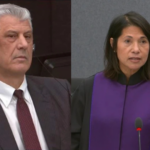 Kryeprokurorja e Specializuar shokon nga Haga: Hashim Thaçi përballet me akuza të rënda, do të dënohet gjatë
 PO ADEM JASHARI, A ISHTE UÇK?! Mos ma përmendni LDK-në nëse nuk e kujtoni gjakun e njerëzve që dhanë jetën për të! Nga Fazli Hajdaraj
 Internet i shpejtë për të gjithë, në të gjithë Zvicrën
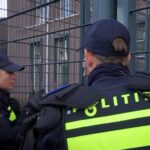 Tensione para Dhomave të Specializuara në Hagë- Protestuesit përplasen me policinë holandeze: Largohuni ose do përdorim forcën
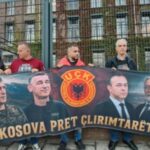 Rrezikojnë dhjetëra vite burgim secili! Shqiptarët në mbështetje të ish-krerëve të UÇK në Hagë: Dënimi i tyre do të ishte vendim politik!
 “Lufta jonë kishte qëllim mbrojtës!” Konjufca para vendimit në Hagë: Presim aktgjykim lirues për Thaçin, Veselin, Selimin dhe Krasniqin
 “Arrestoni Ramën, lironi qytetarët” Protestuesit ‘zbarkojnë’ te Blloku i Sigurisë: Lironi shqipet! Gjithë Shqipëria është me ju
 Sot është dita e vendimit për Hashim Thaçin, Kadri Veselin, Jakup Krasniqin dhe Rexhep Selimin
 Shtatorja e Mbretëreshës Teuta vendoset në Shëngjin, vepra 9 metra e lartë