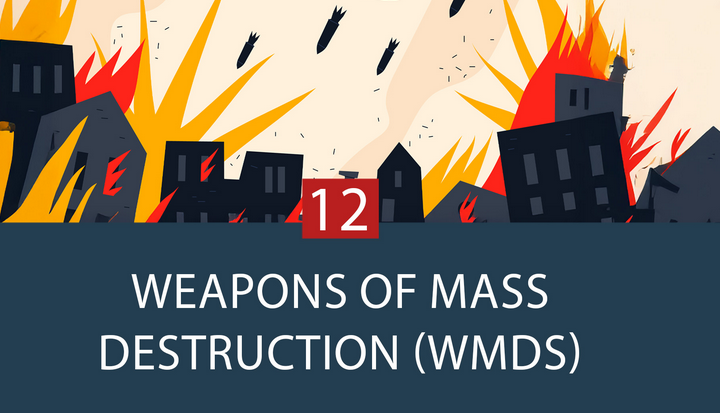
Weapons of mass destruction — nuclear, chemical, and biological — pose a global threat to human existence.
Introduction
Their use is not limited to state conflicts; repressive regimes and extremist groups can also use them for terror, pressure, and destabilization. The case of Kosovo during the 1990s clearly illustrates the consequences of chemical weapons used against civilians, including children and students.
Chemical and Biological Weapons
Mechanism of Poisoning
• Chemical weapons use toxic substances that affect the nervous system, lungs, and vital organs. Known examples include sarin, VX, and mustard gas.
• Biological weapons use microorganisms or toxins to cause epidemic diseases, destabilizing societies and economies.
Consequences
The effects include death, mass illness, psychological trauma, and disruption of normal community life.
The Kosovo Case: An Example of Chemical Weapon Use
During the 1990s, under Slobodan Milošević’s regime, there were reports of poisoning of Albanian students in schools in Prishtinë, Gjilan, and surrounding villages[1][2]. The use of chemical substances served as a tool of pressure and terror, interrupting education and causing long-term psychological trauma among children and civilians.
This example shows that even unprotected civilian communities can become victims of such weapons.
International Examples
• Iraq under Saddam Hussein used sarin and mustard gas against Kurdish cities, killing thousands of civilians[3].
• Aum Shinrikyo in Tokyo, 1995, released sarin gas in the subway, causing multiple fatalities and injuries[4].
• Russia conducted nuclear tests in Nova Zembla, including the Tsar Bomba[5].
• North Korea has developed and tested nuclear weapons[6].
• Iran, India, Pakistan, Iraq have nuclear programs and capabilities for weapons of mass destruction[7].
The Threat from Extremist Groups
Extremist groups pose a major threat to global security, particularly through the use of chemical, biological, and in some cases nuclear weapons. Known examples include:
• ISIS – Used mustard gas and chlorine in Syria and Iraq, killing and injuring civilians[8].
• Al-Qaeda and its branches – Benefited from destabilized regions to acquire chemical and biological materials.
• Taliban (Afghanistan) – Shown interest in using mass violence and destabilizing the region.
• Hezbollah (Lebanon) – Supported by Iran and Syria; has access to dangerous weapons and armed operations.
• Boko Haram (Nigeria) – Has carried out massive attacks and is reported to have interest in chemical weapons.
• Hayat Tahrir al-Sham (Syria) – A branch of former Al-Qaeda, operating in war zones with possible access to chemical materials.
• Al-Shabaab (Somalia) – Conducts terrorist attacks and destabilizes local governments.
• ISIS-K (Khorasan, Afghanistan) – A branch of ISIS with high activity in insecure regions.
Extremist Groups Influenced by States
Some groups may receive influence, technical support, or logistical backing from powerful states pursuing aggressive policies:
• Russia – Reports indicate that certain proxy organizations or extremist groups in the Middle East and Eastern Europe have been influenced or supported to exert political pressure and regional destabilization[9].
• North Korea – Branches of militant groups may have access to nuclear expertise and chemical weapons technology developed by the state.
• Iran – Supports groups like Hezbollah and militias in the Middle East, providing access to chemical weapons or military technology.
The combination of state expertise, regional destabilization, and extremist ideology creates a significant risk for civilians and global stability. This makes international monitoring, arms control, and global cooperation essential to prevent humanitarian disasters.
International Conventions and Laws
1. Non-Proliferation Treaty (NPT): Prevents the spread of nuclear weapons and promotes the peaceful use of nuclear energy[10].
2. Chemical Weapons Convention (CWC): Prohibits production, storage, and use of chemical weapons; requires destruction of existing stockpiles[11].
3. Biological Weapons Convention (BWC): Prohibits the development, production, and possession of biological weapons and toxins[12].
4. International humanitarian law and laws on war crimes: The use of weapons against civilians is considered a crime against humanity and a war crime[13].
Global Consequences
The use of weapons of mass destruction has effects beyond the site of deployment:
• Mass death and disease
• Psychological trauma and social destabilization
• Long-term contamination of soil, water, and air
• Global phenomena such as nuclear winter following a major nuclear conflict[14]
Conclusion
History and international examples, including the case of Kosovo, show that weapons of mass destruction are a real and ongoing threat to humanity. International cooperation, adherence to laws and conventions, rigorous control, and global awareness are essential to protect civilians and maintain world stability.
Footnotes:
[1] Local media reports in Kosovo, 1990-1999, on poisoning of students in schools.
[2] Human Rights organizations in Kosovo, documents on the use of chemical weapons during Milošević’s regime.
[3] Amnesty International, “Chemical Attacks in Iraq”, 1980s.
[4] Human Rights Watch, “Tokyo Sarin Attack”, 1995.
[5] History of nuclear tests in Nova Zembla, Soviet Union/Russia.
[6] International reports on North Korea’s nuclear tests, 2006-2017.
[7] Nuclear programs of Iran, India, Pakistan, and Iraq.
[8] Reports on possible capture of chemical weapons by extremist groups.
[9] Reports on state influence from Russia and North Korea over extremist groups.
[10] Non-Proliferation Treaty, 1968.
[11] Chemical Weapons Convention, 1993.
[12] Biological Weapons Convention, 1972.
[13] International humanitarian law regarding the use of weapons against civilians.
[14] Nuclear winter: drastic global temperature reduction following a nuclear conflict.
The Land of Leka;09.04.2026

 KARAFILAT QË PËRQAFOJNË “KARIATIDET ”… Kujtime DR. EDUARD A. SKUFI
 Urime për postin e Presidentes, Justinë, çika shtatselvi e Simon Shirokës! Nga Çun Lajçi
 SKIFTER NË SHKREPA- Nga ARIF EJUPI
 KUR RIVALITETI POLITIK I LË VEND INTERESIT TË PËRGJITHSHËM- Nga ARIF EJUPI
 Prokuroria e akuzon Thaçin se ka gënjyer për historinë e UÇK-së – Thaçi duket se u kundërgodit nga intrigat e tij Nga Idriz Morina
 Albin Kurti & opozita duhet të bien dakord për Faton Bislimin, kandidatin për president konsensual propozuar nga kongresmeni JoeDioGuardi & ambasadori Walker Nga Elida Buçpapaj
 Shqipëria në planin rajonal për rikthimin e pyjeve, në fokus Alpet dhe pellgu i Drinit
 Kendi i humorit: I kërkon partnerit të bëjnë përsëri dashuri
 U miratua me 85 vota pro ndarja e re administrative, Shqipëria me 15 bashki më pak, si do funksionojnë! Ekspertët skeptikë: Nuk garanton shërbime për qytetarët
 UGSHPD: TAULANTIT I SHKET GJUHA-Ne jemi palë
 KOSOVA ZGJODHI PRESIDENTEN – TANI DUHET TË ZGJEDHË RRUGËN- Nga Frank Shkreli
 Kosovë, ktheja emrin e vet Kosovës, Dardani- Poezi nga ATDHE GECI