Relying on the theoretical approaches of structural realism, liberal institutionalism, and constructivism, this paper argues that the decision-making deadlock in the United Nations Security Council is the result of rivalries among major powers. Special attention is given to the role of France as a mediating actor, but also as a factor contributing to the fragmentation of Western unity.
1. Introduction
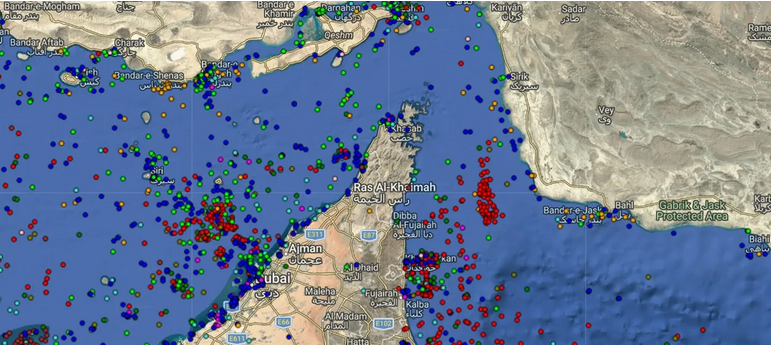
The Strait of Hormuz crisis represents one of the most critical challenges to international security. As a strategic node for global energy trade, any disruption has immediate consequences for the global economy. The United Nations Security Council’s inability to produce a coordinated response reflects the structural tensions of the international system.¹
2. Theoretical Framework
2.1 Structural Realism
The international system is characterized by anarchy and competition for power.² Great powers primarily act according to national interest, placing global order in a continuous balancing equation.
2.2 The Security Dilemma
Defensive measures are often perceived as threatening, creating spirals of escalation.³ Events in the Strait of Hormuz show how mutual security fears generate ongoing tensions among key actors.
2.3 Liberal Institutionalism
International institutions facilitate cooperation and reduce uncertainty, but when interests diverge, they become arenas of rivalry.⁴ The Security Council demonstrates the limitations of multilateral institutions in times of crisis.
3. The Political Economy of the Crisis
The Strait of Hormuz is the main artery for global oil trade.⁵ Its blockage causes price increases, economic uncertainty, and inflationary pressures, illustrating the phenomenon of “weaponized interdependence.”⁶ Involved states use this strategic route as a political instrument to achieve both domestic and international objectives.
4. Deadlock in the Security Council
The deadlock is the result of strategic divergences and the use of vetoes by major powers.⁷ Any attempt to authorize the use of force to ensure safe passage was opposed by China and Russia, illustrating the weakness of Western unity and the structural tensions of the UN.
5. The Role of France
5.1 Strategic Autonomy
France pursues a policy independent of the United States, aiming for strategic autonomy in military and diplomatic decision-making.⁸
5.2 France as a Mediating Actor
In the Strait of Hormuz crisis, France promotes diplomatic solutions and compromise, opposing the broad use of force. This role positions France as a communication bridge between the West and powers such as China and Russia.⁹
5.3 France as a Divisive Factor
Its position fragments Western unity and creates room for separate negotiations with non-Western powers. This reflects France’s approach as a middle power, affecting the balance of power and the effectiveness of the Security Council.¹⁰
6. Discussion and Theoretical Interpretation
The crisis demonstrates:
• The transition toward multipolarity
• The weakening of multilateral institutions
• The growing role of mediating actors
France appears as an ambivalent actor: stabilizing through diplomacy, yet fragmenting through strategic divergence.¹¹
7. Conclusions
• The deadlock in the Security Council is structural and reflects rivalries among major powers.¹²
• France plays a key role as a mediating actor and as a factor that fragments Western unity.¹³
• The Strait of Hormuz crisis illustrates the transformation of the international order toward multipolarity and the constraints of multilateralism.¹⁴
Footnotes:
1. Assessment of the UN’s role and its challenges in the Hormuz crisis is drawn from Associated Press analyses and reports by international security experts on transport blockages.
2. Kenneth Waltz, Theory of International Politics (Reading: Addison-Wesley, 1979), 88.
3. John H. Herz, “Idealist Internationalism and the Security Dilemma,” World Politics 2, no. 2 (1950): 157–158.
4. Robert O. Keohane, After Hegemony (Princeton: Princeton University Press, 1984), 45–46.
5. International Energy Agency (IEA), World Energy Outlook, 2022.
6. Henry Farrell and Abraham Newman, “Weaponized Interdependence,” International Security 44, no. 1 (2019): 42–45.
7. John J. Mearsheimer, The Tragedy of Great Power Politics (New York: W.W. Norton, 2001), 310.
8. Jolyon Howorth, Strategic Autonomy in European Defense (London: Routledge, 2017), 21–23.
9. Analysis of France’s diplomatic statements and communications with China and Russia during Security Council negotiations.
10. Studies on France’s “middle power” policy and its impact on Western unity, including reports from European think tanks.
11. Theoretical interpretation of the tension between stabilizing diplomacy and strategic fragmentation, using realism and institutionalism.
12. Assessment of the deadlock as a structural phenomenon in international relations, based on literature on great power rivalry.
13. France’s role as a mediating and divisive actor, according to analyses of the Strait of Hormuz case.
14. Conclusions on the crisis’s impact on global multipolarity and the weakening of multilateral systems.
The Land of Leka;04.04.2026
 KARAFILAT QË PËRQAFOJNË “KARIATIDET ”… Kujtime DR. EDUARD A. SKUFI
 Urime për postin e Presidentes, Justinë, çika shtatselvi e Simon Shirokës! Nga Çun Lajçi
 SKIFTER NË SHKREPA- Nga ARIF EJUPI
 KUR RIVALITETI POLITIK I LË VEND INTERESIT TË PËRGJITHSHËM- Nga ARIF EJUPI
 Prokuroria e akuzon Thaçin se ka gënjyer për historinë e UÇK-së – Thaçi duket se u kundërgodit nga intrigat e tij Nga Idriz Morina
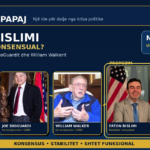 Albin Kurti & opozita duhet të bien dakord për Faton Bislimin, kandidatin për president konsensual propozuar nga kongresmeni JoeDioGuardi & ambasadori Walker Nga Elida Buçpapaj
 Shqipëria në planin rajonal për rikthimin e pyjeve, në fokus Alpet dhe pellgu i Drinit
 Kendi i humorit: I kërkon partnerit të bëjnë përsëri dashuri
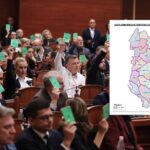 U miratua me 85 vota pro ndarja e re administrative, Shqipëria me 15 bashki më pak, si do funksionojnë! Ekspertët skeptikë: Nuk garanton shërbime për qytetarët
 UGSHPD: TAULANTIT I SHKET GJUHA-Ne jemi palë
 KOSOVA ZGJODHI PRESIDENTEN – TANI DUHET TË ZGJEDHË RRUGËN- Nga Frank Shkreli
 Kosovë, ktheja emrin e vet Kosovës, Dardani- Poezi nga ATDHE GECI