- Anyone who attempts to form a government with the hostile organization “Lista srpska” will fail shamefully
The local elections of October 12 were well organized, and the people of Kosova demonstrated a high level of democratic culture. The same cannot be said for the majority of journalists and analysts, who have turned into biased and very tedious individuals. Their opinions, together with the polls and exit polls that began to appear before the elections had even ended, created unprecedented confusion. However, as the results gradually came in, the situation came under control and everyone began to face reality.
With the completion of the vote count—including conditional and diaspora ballots—I believe KDI’s assessment is confirmed: Vetëvendosje (LVV) has made a significant improvement compared to the 2021 local elections.
Attacked by the Serbian aggressor, which poured millions of dollars inside and outside Kosova to destroy it; unfairly hit by certain international actors driven by vain geopolitical interests; undermined by pro-Serbs like the Grenell’s and the Rama’s; opposed by a power-hungry and unhealthy opposition, a corrupt media, and many others—Vetëvendosje and its coalition should be satisfied with their results. This shows that the people understand that, despite possible mistakes, they are victims of malicious forces because they work in the interest of the state and the nation.
Nevertheless, local election results depend primarily on the quality of the candidates and are not always linked to party affiliation. Many voters personally know the candidates and vote based on individual merit. Some LVV candidates—and fewer from other parties—won because they were well-known and had proven results.
A particularly impressive and positive case for the future was Ramiz Lladrovci’s convincing victory against the candidate supported by his party in Drenas. The PDK mobilized all its forces against Ramiz, but his sincerity, dedication to the people, and record of work defeated the party’s corrupt clique.
The result in Peja, where Gazmend Muhaxheri received the most votes—even though he goes to a runoff—is incomprehensible. How can the citizens of Peja vote for a candidate who compared the democratic government of Kosova to Milošević’s fascist regime?! His public statements are not only false but hostile toward the state of Kosova.
The result in Mitrovica (split between North and South by the PDK) is also disappointing and puzzling. How can the citizens of Mitrovica vote for a PDK candidate—the same party that let the North fall under the boot of Vučić’s chauvinistic and criminal regime? It was the Kurti government, namely Vetëvendosje with Guxo and Alternativa, that expelled the gangs and brought the northern part under Kosova’s control.
The return to ancestral homes, properties, and lands has begun. The building of bridges and a normal life for Albanians—but also for the Serbian minority—has started. Not long ago, Albanians did not even dare approach the Ibër bridge for fear of being killed by Serbian gangs. It is deeply disappointing that Mitrovica voters ignored this, especially since Faton Peci was a serious, capable, and proven candidate.
The victory of the Serb List in artificially created municipalities with a Serbian majority is not a surprise. This cannot be blamed on Vetëvendosje—but directly and unquestionably on PDK, LDK, and AAK/Nisma. These parties, together with their collaborators in the CEC and the Constitutional Court of Kosova—frightened by international actors and hoping to return to power with their help—allowed the registration and participation in democratic life of an openly hostile organization that does not even recognize the state of Kosova.
This is an absurd phenomenon and a world record that deserves to enter the Guinness Book. The hostile organization “Lista Srpska” (Serb List), which openly works against Kosova and is directed from Belgrade, exploits the “right” to destroy “democratically” its own state in the interest of a foreign hegemonic state—Serbia.
This makes it existentially necessary to form, as soon as possible, a Government of Kosova led by the election winner—Vetëvendosje, Guxo, and Alternativa with Prime Minister Albin Kurti—in coalition with minority parties (excluding the Serb List) and with the LDK or individual MPs dissatisfied with their party leaderships. Otherwise, there is no solution other than early elections.
Anyone who attempts to form a government with the hostile organization Serb List will fail shamefully.
The only hope for preserving and developing the state of Kosova—and keeping the Serb List under control, forcing it to respect the Constitution and laws of Kosova—is for the state to continue to be led by proven leaders with undeniable experience and ability: Prime Minister Albin Kurti, President Vjosa Osmani, and former Speaker of Parliament Glauk Konjufca.
I am convinced that if new national elections are held, the biggest losers will be LDK and NISMA, if they refuse to enter a coalition with Vetëvendosje, while Vetëvendosje with Guxo and Alternativa will win more than 50% of the vote. Some opposition party representatives have repeatedly declared that, if they gain power, they will return the North under Serbian control.
The manipulations about alleged “rifts with international friends and America” no longer deceive the people of Kosova. Even America—despite temporary geopolitical interests—ultimately prefers strong leaders committed to their country, not corrupt swindlers.

 Konferenca e Valbonës-Tropojë dhe synimet antikombëtare të organizatorëve të saj- Nga Agron Isa Gjedia
 KUR BIJTË E SAJ I VLERËSON KRAHINA- Përgatiti: Besnik Bedollari (Poet, publicist)
 Historia e panjohur e dy familjeve antikomuniste nga Puka: Çun Kuraj u arratis së bashku me të shoqen dhe vajzën e 7 muajshe, por shpejt u përhap lajmi i kobshëm se duke kaluar Drinin
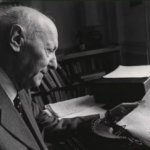 KABALISTI I BROADWAY-T LINDOR- Tregim nga ISAAC BASHEVIS SINGER (NOBEL, 1978)- Pёrktheu: Mimoza Erebara
 “Miku im, ti nuk ke vdekur! Na ike herët dhe padrejtësisht”- Fjalimi prekës i Big Mamës për Shpat Kasapin: Kjo nuk është lamtumirë, por shihemi përsëri
 Revista belge (1962) “Ndihem plotesisht pergjegjes per barren qe rendon mbi supe…” — Intervista ekskluzive me Mbretin Leka I ne Zvicer
 Disa shtete bojkotojnë Eurovisionin për shkak të Izraelit
 “Po na i vrasin djemtë”- Lutja e dy nënave më 1977 te Nexhmije Hoxha për Vilsonin e Gencin! Ngjarja në Bllok dhe pushkatimi i tyre
 “E gjithë ministria e Ballukut e pandehur apo në arrest”- Agron Shehaj: Parlamenti po mbron një zv.kryeministre të pezulluar nga Gjykata
 “Mogherini jep dorëheqjen nga detyra”- Berisha: Ky është standardi europian, kurse Lubi Balluku nuk largohet apo të shkarkohet nga Rama!
 Abuzimet e Ballukut dhe pezullimi nga GJKKO, reagon Ambasada Amerikane: Pavarësia e drejtësisë, thelbësore për bashkëpunimin mes dy vendeve
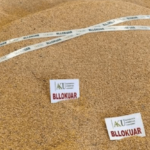 AKU kthen 51 tonë misër të ardhur nga Serbia, pas analizave të kryera rezultuan me aflatoksinë