Sister Adelina Marku raises alarm over the difficult conditions in Albania’s remote areas: “Health cannot be a matter of fate, but a right”.
There are moments when words are no longer just words. They become pain. They become prayer. They become a call that rises from the depths of the earth and reaches the conscience of an entire nation.
In Tirana, during a national protest, the voice of Sister Adelina Marku from Mirdita was not merely participation in a gathering. It was the echo of another Albania — one that is not seen enough, not heard enough, one that lives between deprivation and long endurance.
And she said something that cannot pass as an ordinary political statement. She said:
“Thank God my parents do not get sick, because in the north, if you fall ill, we are left unprotected.”
In this sentence, there is not only personal concern. There is a silent accusation. There is a reality that does not require interpretation, but responsibility. Because when a citizen of this country prays that health be luck rather than a right, then something fundamentally important is no longer functioning properly in society.
Is this the Albania that was promised over 36 years? Is this the equality that was spoken of in programs, in speeches, and in repeated promises?
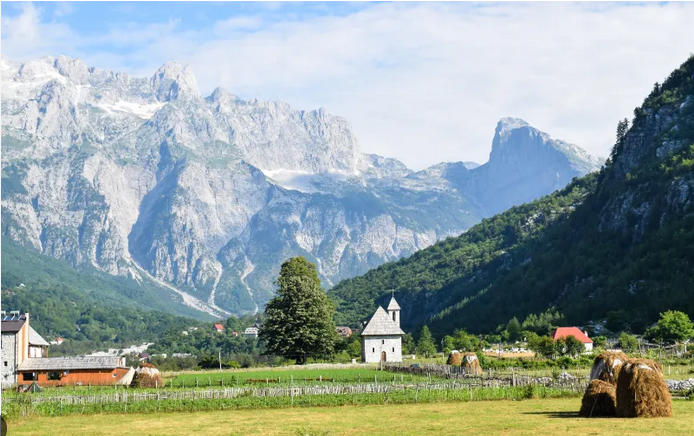
In the remote areas of the north, life is often measured not by development, but by survival. Not by standards, but by the distance to a doctor, by roads that are not always accessible, by time becoming an enemy when emergency knocks on the door.
And this is not only a matter of infrastructure. It is a matter of dignity.
Because a state is measured not only by its developed centers, but by the way it treats its most distant and forgotten edges. And when the edges feel abandoned, the center can no longer be called complete.
Sister Adelina Marku also spoke about another painful reality: the sense of partial and insufficient development that fails to cover long-standing wounds.
“The north is proud of a few small things that have been done, but this is not enough. After 36 years, we still cannot live with such basic shortages.”
These are not just words. They are a mirror. They reflect a reality where progress often appears as an island in the middle of a vast sea of unmet needs.
In this context, silence becomes complicity. And forgetfulness becomes a greater danger than shortage itself.
Because shortage is visible. Forgetfulness is not — but it is felt every single day.
And perhaps here lies the deepest moral weight of this story: the fact that these voices are not asking for privilege, but for equality; not for pity, but for justice; not for new promises, but for genuine care.
At the end, the words of Gjergj Fishta rise like a deep spiritual reminder over this entire reality:
“The national flag has no meaning among us, if we do not have love for the Homeland!”
Bibla,Proverbs 31:8-9
“Hap gojën për të pagjeturin dhe për të gjithë ata që janë të braktisur. Mbro të drejtat e të varfërve dhe të nevojtarëve.”
And the question remains — one that does not require rhetoric, but conscience:
How long can a country live, when part of it is still praying for the most basic necessities of life?
The Land of Leka,06.06.2026

 Gazeta britanike: Shqipëria noton në para droge, Rama nuk kërkon falje për rolin e të atit në varjen e Havzi Nelës
 Ndërron jetë Flora Brovina, nesër do të dëshmonte për Masakrën e Dubravës
 “NË KOHËN E BRITMËS” – ROMAN I VISAR ZHITIT. “RILINDJET” E VDEKURA TË SHQIPËRISË DHE PROTESTA… Nga Era Xhaferaj
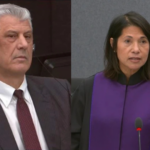 Kryeprokurorja e Specializuar shokon nga Haga: Hashim Thaçi përballet me akuza të rënda, do të dënohet gjatë
 PO ADEM JASHARI, A ISHTE UÇK?! Mos ma përmendni LDK-në nëse nuk e kujtoni gjakun e njerëzve që dhanë jetën për të! Nga Fazli Hajdaraj
 Internet i shpejtë për të gjithë, në të gjithë Zvicrën
 Këndi i humorit: Një burrë dhe një grua shkojnë te mjeku
 Aforizmi i ditës- 16 shtator 2026
 HOROSKOPI E MËRKURË 16 SHTATOR 2026
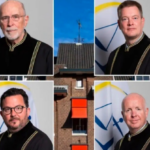 Gjyqtarët në Hagë që nesër do të japin verdiktin: Amerikani, Charles Smith III (kryesues), gjermani Christoph Barthe, zvicerani Guanawl Mettraux & irlandezi Fergal Gaynor
 Albin Kurti: Flora Brovina do të kujtohet nga populli i Kosovës për angazhimin publik dhe veprën e saj kulturore
 Hoti me një gur vret dy zogj: ta çajë LDK-në dhe ta çojë shtetin në zgjedhje pa fund!