The Role of Belgrade, the Berlin Process, Kosovo, and Russian Interests
Preface
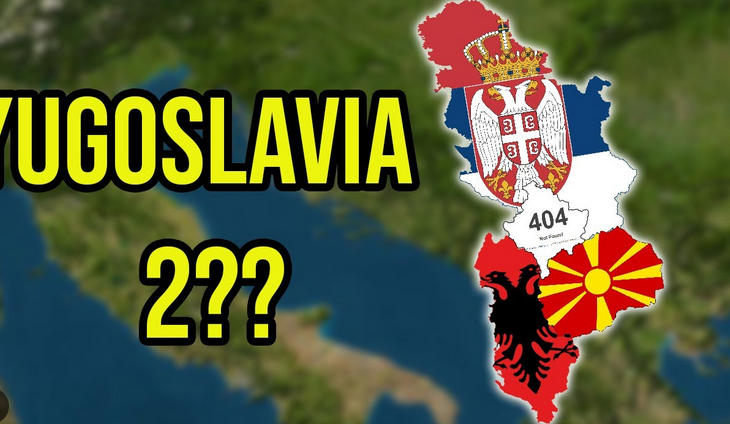
This study examines the strategic dynamics of the Open Balkan initiative, focusing on the central role of Belgrade, the minimization of the Berlin Process, the challenges for Kosovo, and the involvement of Russia. Open Balkan, as a regional economic cooperation project among Albania, Serbia, and North Macedonia, goes beyond economic integration; it serves as a political tool in the regional power balance.
By analyzing historical continuities, bilateral collaborations, and international responses, this work sheds light on how regional initiatives can challenge official EU processes while reshaping political and economic hierarchies in the Western Balkans.
1. Origins and Core Features Open Balkan is a regional initiative involving Albania, Serbia, and North Macedonia, designed to create a common economic space with free movement of goods, services, capital, and people. The signing documents in Skopje (2019) and Novi Sad (2020) include mechanisms for harmonizing customs procedures and facilitating labor and goods mobility [1][2]. Beyond its economic dimension, the operational center in Belgrade grants Serbia a decisive role and political advantage. This center functions as the main instrument for regional strategic decision-making, turning Open Balkan from a mere economic project into a politico-economic mechanism with significant influence over smaller countries, particularly Kosovo [3].
2. Official Objectives and Tensions with EU Processes
a. Official Objectives
• Free movement of goods, services, and people
• Regional economic cooperation and financial stability
• Framework for gradual economic integration as a “stepping stone” toward the EU [4]
b. Tensions with the Berlin Process The Berlin Process is the EU’s official initiative for the Western Balkans, focused on:
• Regional infrastructure development
• Strengthening the rule of law and democratic standards
• Gradual EU integration with monitoring through official mechanisms [5]
Operating outside these mechanisms, Open Balkan creates a parallel structure:
1. Minimizes EU authority and regional decisions taken under official processes
2. Concentrates decision-making in Belgrade, granting Serbia a dominant role
3. Creates an alternative space that challenges Berlin’s authority [6]
Practical examples:
Regional infrastructure projects under Open Balkan (roads, energy, telecommunications) are often approved without full consultation with the EU, creating structural advantages for Serbia [7].
3. The Role of Belgrade as Decision-Making Center and Political Instrument
• Belgrade functions as a strategic center where key decisions regarding economic development and regional political cooperation are made with priority for Serbia [8]
• Regional project development often includes elements that increase Belgrade’s influence over Albania, North Macedonia, and indirectly over Kosovo [9]
• This positions Belgrade not only as an economic hub but also as a political actor challenging EU mechanisms and the Berlin Process [10]
Concrete example:
Coordination of fiscal policies and customs duties between Serbia and Albania within Open Balkan, excluding non-member countries, allows Belgrade to dictate the pace of regional integration [11].
4. Minimizing the Berlin Process and Tensions with the EU
• Open Balkan creates an alternative decision-making structure, bypassing EU mechanisms and establishing Serbia as a regional leader [12]
• Reduces the participation of smaller countries and creates an environment where decisions do not reflect the comprehensive consensus required by the EU [13]
• Economic cooperation is used as a political instrument: Serbia advances its influence without mutual recognition or democratic standards mandated by the EU [14]
5. Challenges for Kosovo • Kosovo has refused participation in Open Balkan, arguing that the initiative is politically harmful without mutual recognition [15]
• Serbia’s constitution (Article 1) considers Kosovo an integral part, complicating any involvement of Kosovo in the regional initiative [16]
• Serbia’s strategy aims to create a de facto economic and political reality without international recognition, using Open Balkan as a tool to reduce Kosovo’s sovereignty [17]
6. Recent Trends and Impact on Rama–Vučić Relations
• Implementation of initial objectives has slowed due to political tensions and critical perceptions from countries outside the initiative [18]
• Rama and Vučić continue to promote the project, strengthening Serbia’s position and challenging EU official mechanisms
• Joint editorial in Frankfurter Allgemeine Zeitung (2026) serves as a political tool for legitimization, emphasizing economic cooperation toward Kosovo, contrary to its interests [19]
7. Historical Continuity: Strategy Toward Kosovo a. Esat Pasha (1913–1914)
• Cooperation with Serbia for personal advantages and influence over Kosovo [20]
b. Agreements of Pašić and Zog
• Albania often served as an instrumental partner for Serbia’s regional policies [21]
c. Parallels with Rama–Vučić
• Open Balkan and the FAZ editorial reflect the same historical logic: Albania as partner, Belgrade as decision-making center, Kosovo outside decision-making [22]
d. International impact
• This historical line heightens EU and US concerns regarding de facto realities in Kosovo and the challenge to the Berlin Process [23]
8. Russia’s Role and Interests a. Historical and strategic ties between Serbia and Russia
• Serbia has a close partnership with Russia in energy, politics, and regional security [24]
• Russia has used its influence to support Belgrade’s position on Kosovo and the Western Balkans, challenging EU official mechanisms [25]
b. Open Balkan and Russian perspective
• From Moscow’s perspective, Open Balkan is an informal tool to expand Russian influence in the Balkans, undermine Euro-Atlantic integration, and create a space where Belgrade acts as an alternative decision-making center [26]
c. Economic and energy interests
• Russia provides investments in energy, such as gas pipelines and hydroelectric projects, making Serbia dependent on Russian resources [27]
• This economic dependency allows Russia to influence Belgrade’s decisions regarding Open Balkan and regional cooperation [28]
d. Impact on Kosovo and the region
• The Russian strategy via Belgrade maintains indirect control over Kosovo and the Western Balkans
• Open Balkan can be seen as a Russian instrument to challenge Euro-Atlantic integration, increasing political tensions and reducing EU and US influence [29]
9. Critical Conclusion • Open Balkan is not merely economic; it is a political instrument of Serbia, with its partner Rama in Albania
• The minimization of the Berlin Process and the operational center in Belgrade challenge EU authority
• Russian influence strengthens this dynamic, turning the region into a space where Kosovo’s sovereignty and Euro-Atlantic integration are threatened
• Kosovo’s participation should be guaranteed with international oversight and transparency to preserve sovereignty and regional stability [30]
Summary
This study demonstrates that Open Balkan serves multiple functions beyond economic integration. Belgrade acts as the strategic hub, diminishing the authority of the Berlin Process, while smaller countries, especially Kosovo, face political and economic marginalization. The historical patterns of regional influence, the coordinated collaboration between Rama and Vučić, and Russia’s strategic involvement illustrate a complex network of local and international interests. These dynamics emphasize the need for careful oversight to ensure that Kosovo’s sovereignty and Euro-Atlantic aspirations are protected, while regional integration proceeds under transparent and inclusive frameworks.
References:
[1] Wikipedia, “Open Balkan,” history and main participants, including Skopje (2019) and Novi Sad (2020) agreements, accessed 2026. [2] Ministry of Foreign Affairs of Serbia, Skopje Agreement, official document on the establishment of “Mini-Schengen” and objectives for free economic movement and regional employment. [3] Deutsche Welle, “Risks of Open Balkan for regional politics,” analysis of Belgrade’s role as decision-making center and political dominance over smaller countries, 2022. [4] Comillas Journal of International Relations, “Economic Integration vs Political Risk in Open Balkan,” academic study on official objectives and tensions with the Berlin Process, 2021. [5] Official Berlin Process documents, European Union, 2020, including regional development strategy, rule of law, and gradual integration into the EU. [6] Stiftung Wissenschaft und Politik (SWP) Berlin, “Open Balkan and the Berlin Process,” Policy Brief, 2021. [7] Balkan Insight, “Regional Infrastructure Projects under Open Balkan,” analysis of infrastructure projects coordinated by Belgrade without full EU consultation, 2022. [8] Regional political analysis, “Belgrade as the Strategic Center of Open Balkan,” 2023. [9] Kosovo Online, reports on Serbia’s influence over smaller countries and challenges for Kosovo, 2022. [10] Diplomacia.dk, “Serbia’s Dominance in Open Balkan,” study on the effect of Belgrade’s operational center on regional mechanisms and EU tensions, 2022. [11] Balkan Policy Center, report on economic coordination and customs duties between Serbia and Albania, 2021. [12] Comillas Journal, analysis of alternative decision-making structure. [13] SWP Berlin, report on EU tensions, 2022. [14] Deutsche Welle, regional political analysis. [15] Wikipedia (Spanish), Kosovo’s refusal to join Open Balkan, 2020. [16] Constitution of Serbia, Article 1. [17] Kosovo Online, analysis of Belgrade’s de facto strategy, 2022. [18] Nin.rs, analysis of progress and debates on continuity, 2022. [19] Frankfurter Allgemeine Zeitung, joint editorial by Rama and Vučić, 2026. [20] Historical records of Esat Pasha and relations with Serbia (1913–1914), Albanian Historical Archive. [21] Agreements of Pašić and Zog, Albanian Historical Archive. [22] Balkan Insight, “Comparative Historical Analysis Rama–Vučić,” 2023. [23] SWP Berlin, analysis of historical continuity and international implications, 2022. [24] Institute for Strategic Studies, Serbia–Russia Energy Relations, 2022. [25] Russian International Affairs Council, “Russia’s Influence in the Western Balkans,” 2021. [26] Comillas Journal, “Russia’s Perspective on Open Balkan,” 2022. [27] Balkan Energy Monitor, Russian investments in energy projects in the Balkans, 2022. [28] Deutsche Welle, Russian influence on Belgrade decisions, 2022. [29] Balkan Insight, challenges to Euro-Atlantic integration under Russian and Belgrade influence, 2022. [30] Kosovo Online and Deutsche Welle, recommendations for safe participation of Kosovo, 2022.
The Land of Leka; 25.03.2026
 KARAFILAT QË PËRQAFOJNË “KARIATIDET ”… Kujtime DR. EDUARD A. SKUFI
 Urime për postin e Presidentes, Justinë, çika shtatselvi e Simon Shirokës! Nga Çun Lajçi
 SKIFTER NË SHKREPA- Nga ARIF EJUPI
 KUR RIVALITETI POLITIK I LË VEND INTERESIT TË PËRGJITHSHËM- Nga ARIF EJUPI
 Prokuroria e akuzon Thaçin se ka gënjyer për historinë e UÇK-së – Thaçi duket se u kundërgodit nga intrigat e tij Nga Idriz Morina
 Albin Kurti & opozita duhet të bien dakord për Faton Bislimin, kandidatin për president konsensual propozuar nga kongresmeni JoeDioGuardi & ambasadori Walker Nga Elida Buçpapaj
 Shqipëria në planin rajonal për rikthimin e pyjeve, në fokus Alpet dhe pellgu i Drinit
 Kendi i humorit: I kërkon partnerit të bëjnë përsëri dashuri
 U miratua me 85 vota pro ndarja e re administrative, Shqipëria me 15 bashki më pak, si do funksionojnë! Ekspertët skeptikë: Nuk garanton shërbime për qytetarët
 UGSHPD: TAULANTIT I SHKET GJUHA-Ne jemi palë
 KOSOVA ZGJODHI PRESIDENTEN – TANI DUHET TË ZGJEDHË RRUGËN- Nga Frank Shkreli
 Kosovë, ktheja emrin e vet Kosovës, Dardani- Poezi nga ATDHE GECI