In Kosovo, what should never happen is happening: the inability to elect the President of the Republic, a phenomenon that highlights the weaknesses in institutional functioning and political accountability.
1. Political Incompetence and Boycotting by Deputies
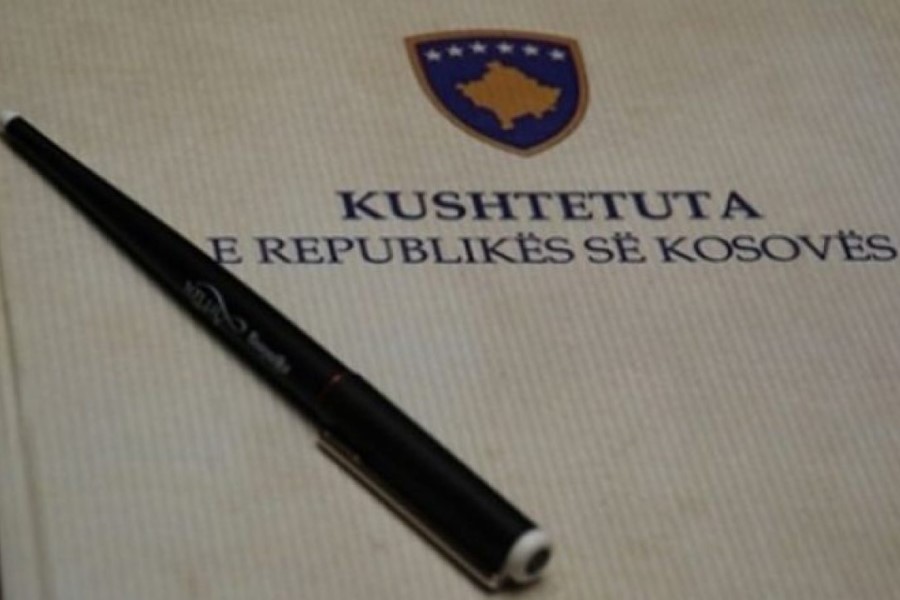
• The opposition, scorned by the people of Kosovo, seeks primitive revenge by failing to present an alternative candidate and by not participating in parliamentary sessions, demonstrating complete political and national irresponsibility. This action undermines the lawful functioning of the institution, as Article 83 of the Constitution of Kosovo stipulates that the election of the President requires two rounds with a two-thirds majority and a third round with a simple majority[1].
The decisions of the Constitutional Court of Kosovo (GJK No. 03/11, 2011; KI 63/20, 2020) confirm that boycotts cannot prevent the continuation of the procedure[2].
• The majority, unable to overcome petty grievances and coordinate procedures, left the matter to the last minutes, showing lack of preparation and unfitness to finalize its spectacular victory in the last elections.
• Vjosa Osmani, “intoxicated” by the achievements of her first term, failed to build bridges of cooperation with both the majority and the opposition. Even when faced with a lack of support, she insisted on running for a second term, undoubtedly deserved, but without accounting for the labyrinths and immorality of parliamentary politics.
• Under these circumstances, in an entirely amateurish manner, only a few hours before the vote, when she realized she would not be elected head of state, she proposed constitutional amendments to institutionalize the direct election of the President by the people — a positive idea, but launched at the most inappropriate time. The outcome, of course, was predictable: immediate rejection favored by the timing of this proposal.
2. Structural Problems: The Ahtisaari Package and the Role of the Minority
The implementation of the Ahtisaari Package is outdated, particularly regarding the blocking role of the 2% Serbian minority, which gives Belgrade influence over Kosovo’s state-building processes. Decisions of the Constitutional Court and recommendations from the Venice Commission suggest adjusting the minority’s role to prevent artificial obstructions while preserving minority rights without allowing their exploitation for political blockages[3].
3. Consequences of the Crisis and Early Elections
• Inevitably, Kosovo will go to early elections, causing electoral fatigue, political destabilization, and considerable economic damage.
• Future results are not expected to fundamentally change the political architecture, putting the country into a difficult electoral cycle where avoiding blockages will require strong legal mechanisms and political will.
4. Alternative Juridical-Political Ideas
The current institutional crisis shows that deputies’ boycotts and lack of coordination can lead to a blockade in electing the President, jeopardizing normal state functioning. Based on the Constitution of the Republic of Kosovo, the Rules of Procedure of the Assembly, and Constitutional Court decisions, concrete juridical-political mechanisms can be proposed:
4.1 Use of Simple Majority in the Third Round According to Article 83 of the Constitution of Kosovo, the President’s election requires a two-thirds majority in the first two rounds and a simple majority in the third round[1]. Constitutional Court decisions (GJK No. 03/11, 2011; KI 63/20, 2020) confirm that lack of full attendance due to boycotts cannot prevent the procedure[2].
Concrete proposal:
The Assembly should proceed with the vote in the third round even when the opposition boycotts, using the simple majority of present deputies.
4.2 International Facilitation and Monitoring Mechanisms
The Venice Commission and international practice suggest employing international missions for mediation in cases of institutional blockage[3].
Concrete proposal:
Engage an international monitoring mission to ensure opposition participation, aligned with the Constitution and national sovereignty, helping to respect procedures and prevent blockages.
4.3 Regulation of the Minority’s Role and Elimination of Intentional Blockages
The Serbian minority has the possibility of blocking under the Ahtisaari Package. Constitutional Court decisions and international recommendations suggest limiting this blocking influence. Concrete proposal: Amend laws and Assembly rules to ensure minority votes are respected without the possibility of intentional blocking, as reflected in Articles 40–50 of the Rules of Procedure of the Assembly, which regulate session and voting procedures[4].
4.4 Clear Deadlines and Procedures for Presidential Voting The Assembly’s Rules of Procedure establish legal deadlines for candidate nominations, sessions, and result reporting. Concrete proposal: • Publish nomination deadlines at least 30 days before the session;
• Set detailed dates for voting rounds;
• Provide detailed real-time reporting of results to avoid manipulation and political pressure.
4.5 Direct Election of the President as a Long-Term Alternative International experts recommend direct election of the President by citizens to reduce parliamentary blocking influence[5].
Concrete proposal:
Institutionalize the procedure through constitutional amendments, respecting representative democracy principles and international election standards. 5. Juridical-Political Benefits • Ensures uninterrupted functioning of the Assembly and institutions;
• Prevents artificial blockages and political manipulation;
• Increases institutional legitimacy and public trust;
• Complies with the Constitution, Rules of Procedure, and international standards;
• Maintains balance between minority rights and democratic majority.
6. Conclusion
Although Kosovo had the opportunity to reconfirm Vjosa Osmani as President, the combination of opposition boycott, majority unpreparedness, and structural weaknesses of the Ahtisaari Package caused a crisis that undermines institutional functioning, democratic legitimacy, and economic stability. Implementing alternative juridical-political ideas — including using simple majority, international mediation mechanisms, regulating minority roles, establishing clear procedures, and direct presidential election as a long-term solution — can ensure sustainable institutional functioning, respect for the law, and political stability. Ultimately, firm leadership, institutional legitimacy, and adherence to the Constitution are the key criteria for the President of the Republic of Kosovo.
Footnotes; [1] Constitution of the Republic of Kosovo, Article 83, “Election of the President of the Republic.” [2] Constitutional Court of Kosovo, Decisions GJK No. 03/11, 2011, and KI 63/20, 2020. [3] Venice Commission, Opinion on the Ahtisaari Package and the Electoral Process, 2008. [4] Rules of Procedure of the Assembly of the Republic of Kosovo, Articles 40–50, voting and deputy participation procedures. [5] Venice Commission, Recommendations on constitutional amendments regarding direct election of the President, 2020. The Land of Leka; 08.03.2026

 KARAFILAT QË PËRQAFOJNË “KARIATIDET ”… Kujtime DR. EDUARD A. SKUFI
 Urime për postin e Presidentes, Justinë, çika shtatselvi e Simon Shirokës! Nga Çun Lajçi
 SKIFTER NË SHKREPA- Nga ARIF EJUPI
 KUR RIVALITETI POLITIK I LË VEND INTERESIT TË PËRGJITHSHËM- Nga ARIF EJUPI
 Prokuroria e akuzon Thaçin se ka gënjyer për historinë e UÇK-së – Thaçi duket se u kundërgodit nga intrigat e tij Nga Idriz Morina
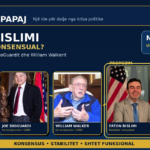 Albin Kurti & opozita duhet të bien dakord për Faton Bislimin, kandidatin për president konsensual propozuar nga kongresmeni JoeDioGuardi & ambasadori Walker Nga Elida Buçpapaj
 Shqipëria në planin rajonal për rikthimin e pyjeve, në fokus Alpet dhe pellgu i Drinit
 Kendi i humorit: I kërkon partnerit të bëjnë përsëri dashuri
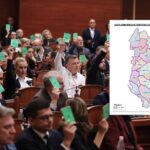 U miratua me 85 vota pro ndarja e re administrative, Shqipëria me 15 bashki më pak, si do funksionojnë! Ekspertët skeptikë: Nuk garanton shërbime për qytetarët
 UGSHPD: TAULANTIT I SHKET GJUHA-Ne jemi palë
 KOSOVA ZGJODHI PRESIDENTEN – TANI DUHET TË ZGJEDHË RRUGËN- Nga Frank Shkreli
 Kosovë, ktheja emrin e vet Kosovës, Dardani- Poezi nga ATDHE GECI