The figure of Rexhep Qosja represents one of the most important pillars of contemporary Albanian critical thought. His work spans three fundamental domains: literary creation, literary criticism and historiography, and essay writing with political and cultural dimensions.
Qosja conceives literature as a form of historical and social consciousness, closely linked to the processes of shaping Albanian national identity and the political developments in the Balkans.
Rexhep Qosja; Albanian literature; literary criticism; history of literature; essay writing; national identity; critical intellectual.
1. Historical Context and the Formation of Critical Thought
Modern Albanian literature developed under complex historical conditions, particularly in the Albanian-inhabited areas of former Jugosllavia, where Albanian cultural identity was shaped under tension with the political and ideological structures of the time.¹
Within this context, Rexhep Qosja develops a critical approach in which literature is not treated as an isolated aesthetic phenomenon, but as part of broader historical, social, and ideological structures.² He expands the function of literary criticism, transforming it into an instrument for interpreting Albanian culture and history.
2. Literary Creation and the Modernization of the Albanian Novel
The novel Vdekja më vjen prej syve të tillë (Death Comes to Me from Such Eyes) represents one of the peaks of modernism in Albanian literature.
The work is characterized by:
* non-linear narrative structure
* deep psychological exploration of characters
* existential symbolism
* crisis of identity and consciousness
This novel marks a transition from traditional realist narration to a modern form of prose, bringing Albanian literature closer to 20th-century European literary developments.³
3. Literary Criticism and Historiography of Literature
The work Historia e letërsisë shqipe: Romantizmi (History of Albanian Literature: Romanticism) constitutes one of the foundational contributions to Albanological studies.
Qosja treats literature as:
* a historical product of social conditions
* an ideological and cultural structure
* a form of constructing national consciousness
This approach marks a shift from descriptive criticism to an analytical and scientific methodology in literary studies.⁴
4. Essay Writing and Political Thought
In the works Populli i ndaluar (The Forbidden People) and Çështja shqiptare: historia dhe politika (The Albanian Question: History and Politics), Qosja addresses fundamental historical and political issues concerning Albanians in the Balkans.
He analyzes:
* the position of Albanians in former Jugosllavia
* processes of political and cultural marginalization
* the formation of modern national identity
* the role of the intellectual in society
In this sense, Qosja appears as an engaged intellectual who uses scholarly analysis as a form of intervention in social reality.⁵
5. The Model of the Critical Intellectual
Qosja constructs a specific model of the Albanian critical intellectual based on:
* active engagement in public discourse
* the link between knowledge and social responsibility
* rejection of complete academic neutrality
* integration of theory and social practice
This model places him within the tradition of the modern public intellectual, where thought is inseparable from social reality.⁶
6. Public Reception and Media Discourse
Qosja’s figure has been continuously present in Albanian and regional public discourse.
Key sources include:
* Koha Ditore
* Gazeta Express
* Telegrafi
* RTK
* Balkan Insight
Additionally, the Albanological Institute of Prishtina and the University of Prishtina have published numerous studies and monographs on his work, placing it at the center of Albanian academic research.⁷
7. Conclusion
Rexhep Qosja remains one of the most complex and influential figures of Albanian critical thought. He represents a model of the intellectual who unites literature, criticism, and public engagement into a single theoretical and cultural system.
His legacy is fundamental for Albanological studies and for the history of contemporary Albanian thought, establishing him as a stable reference point in the analysis of culture and national identity.
References:
¹ Rexhep Qosja, Populli i ndaluar, Prishtina: Rilindja, 1986.
² Rexhep Qosja, Anatomia e kulturës, Prishtina: Rilindja, 1976.
³ Rexhep Qosja, Vdekja më vjen prej syve të tillë, Prishtina: Rilindja, 1974.
⁴ Rexhep Qosja, Historia e letërsisë shqipe: Romantizmi, Prishtina: Rilindja, 1977.
⁵ Rexhep Qosja, Çështja shqiptare: historia dhe politika, Tirana, 1998.
⁶ Sabri Hamiti, Albanian Literary Studies, Prishtina, 2008.
⁷ Shaban Sinani, “Literature and History in Albanian Discourse,” Tirana, 2012.
The Land of Leka,23.04.2026

 KARAFILAT QË PËRQAFOJNË “KARIATIDET ”… Kujtime DR. EDUARD A. SKUFI
 Urime për postin e Presidentes, Justinë, çika shtatselvi e Simon Shirokës! Nga Çun Lajçi
 SKIFTER NË SHKREPA- Nga ARIF EJUPI
 KUR RIVALITETI POLITIK I LË VEND INTERESIT TË PËRGJITHSHËM- Nga ARIF EJUPI
 Prokuroria e akuzon Thaçin se ka gënjyer për historinë e UÇK-së – Thaçi duket se u kundërgodit nga intrigat e tij Nga Idriz Morina
 Albin Kurti & opozita duhet të bien dakord për Faton Bislimin, kandidatin për president konsensual propozuar nga kongresmeni JoeDioGuardi & ambasadori Walker Nga Elida Buçpapaj
 Shqipëria në planin rajonal për rikthimin e pyjeve, në fokus Alpet dhe pellgu i Drinit
 Kendi i humorit: I kërkon partnerit të bëjnë përsëri dashuri
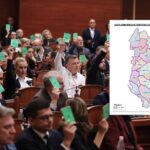 U miratua me 85 vota pro ndarja e re administrative, Shqipëria me 15 bashki më pak, si do funksionojnë! Ekspertët skeptikë: Nuk garanton shërbime për qytetarët
 UGSHPD: TAULANTIT I SHKET GJUHA-Ne jemi palë
 KOSOVA ZGJODHI PRESIDENTEN – TANI DUHET TË ZGJEDHË RRUGËN- Nga Frank Shkreli
 Kosovë, ktheja emrin e vet Kosovës, Dardani- Poezi nga ATDHE GECI