A Critical Position on Greek Political and Diplomatic Discourse Towards Albania
There is a line that diplomacy must never cross: the line of respect for the sovereignty of another state.
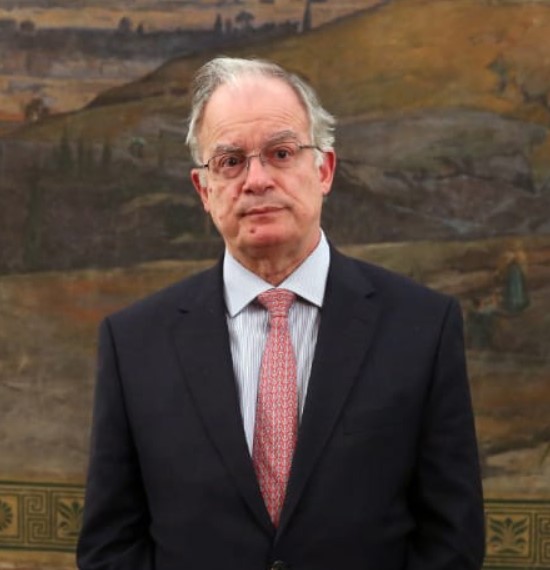
The statements made by the President of the Republic of Greece, Konstantinos Tasoulas, on the occasion of October 28, as well as the commemorative activities organized by representatives of the Greek community in Albania, bring back to the forefront an issue that can no longer be treated with indifference.
The issue is not the commemoration of Greek history. The issue is how history is interpreted, named, and presented in relation to the territory of a neighboring state.
The Greek President and the Responsibility of Presidential Words
Greek President Konstantinos Tasoulas, in his public statement on October 28, 2026, referred to the “epic campaign in Northern Epirus,” in reference to the military developments of 1940.
This statement cannot be separated from the institutional weight of the person making it.
When a head of state uses historically and politically charged terminology in relation to the territory of another country, he must be aware that his words do not remain confined to the boundaries of a national commemorative ceremony.
They carry political and diplomatic messages.
Therefore, Mr. Tasoulas must understand that Albania is not an extension of some historical Greek map, nor is it a territory onto which political nostalgia can be projected.
If the reference concerns the history of 1940, it can and should be commemorated. However, the history of a military operation does not create a right of ownership over the territory of another sovereign state.
It is time for Greek institutions to draw a clear distinction between historical memory and discourse that may be interpreted as relativizing Albania’s territorial reality.
Ambassador Komini: Diplomacy Is More Than Protocol
Particular attention should also be given to Greece’s Ambassador to Tirana, Lambrini Komini, who attended the commemorative ceremony in Vanova.
Naturally, an ambassador has the right to participate in commemorative activities organized by the community she represents. However, diplomatic office demands more than ceremonial attendance.
An ambassador serving in Albania represents the Hellenic Republic on the territory of a sovereign Albanian state. For this reason, every official activity and public message must be consistent with the principles of respect for sovereignty, territorial integrity, and good neighborly relations.
The question is straightforward:
Is Ambassador Komini aware of the historical and political sensitivities associated with the use of the term “Northern Epirus” in Albania?
Does Greek diplomacy consider it necessary to make a clear distinction between commemorating fallen soldiers and any interpretation that could encourage territorial narratives?
If so, it should make this clear through institutional positions.
Diplomacy cannot demand understanding from the Albanian side while simultaneously leaving room for ambiguity on such sensitive matters.
Albania Is Not a Platform for Historical Projects
We must recall a fundamental truth: Albanian territories are not territories with disputed status.
The term “Northern Epirus,” as used in Greek political and nationalist discourse, cannot serve as an alternative to the official designation and state affiliation of territories located within the internationally recognized borders of the Republic of Albania.
Albania’s borders are not determined by the nostalgia of political circles, old maps, or selective interpretations of history.
They are an internationally recognized legal reality.
Therefore, any attempt to relativize this reality, whether through statements, symbols, or political terminology, must receive a clear diplomatic response.
Double Standards Cannot Be Accepted
It is paradoxical that, in Albanian-Greek relations, there is constant emphasis on respecting the rights of the Greek minority, while the issue of full respect for Albania’s sovereignty must never be pushed into the background.
Albania must guarantee the Greek community all its national, cultural, linguistic, and educational rights.
However, no one should confuse minority protection with territorial claims.
The Greek minority is not a problem for Albania. It is part of the country’s social and cultural reality.
The problem begins when issues of identity are used to promote narratives that go beyond minority rights and touch upon the territorial integrity of the Albanian state.
And this is precisely where Greek diplomacy must demonstrate responsibility.
A Question for the Official Authorities in Tirana, Too
But responsibility does not end in Athens.
Where is the response from Albanian institutions?
Will Albanian diplomacy continue to content itself with standard formulas of friendship while such statements pass without the necessary clarification?
The Albanian Ministry for Europe and Foreign Affairs should address this matter with institutional seriousness.
A diplomatic conflict is not being demanded. Clarity is.
A diplomatic note requesting clarification of the terminology and confirmation of respect for Albania’s territorial integrity would be a reasonable step, consistent with the importance of the matter.
The Albanian state should not be aggressive, but neither should it remain passive when issues concerning its dignity and sovereignty are at stake.
Conclusion: Friendship, Yes; Paternalism and Territorial Ambiguities, No!
Greece is our neighbor and a NATO partner. Albania seeks European integration and stable relations with Athens.
But partnership does not mean silence. Good neighborly relations do not mean tolerating ambiguities. And friendship cannot be built upon different standards of respect.
The Greek President must understand the weight of his words. The Greek Ambassador must understand the responsibility of the office she holds in Tirana. Meanwhile, Albanian institutions must understand that sovereignty is not defended only in documents, but also through concrete diplomatic positions.
Albania does not need anyone’s permission to be sovereign over its own territory.
Greece is free to honor its history. The Greek community is free to preserve its identity. But no one should confuse the right to commemorate history with the right to relativize the borders of a sovereign state.
A new century, new relations, and one non-negotiable principle: Albania is not “Northern Epirus.” Albania is Albania!
And this must be understood equally in Athens, in Tirana, and everywhere history is used as a political argument.
Prishtina,31.10.2026

 Bregu i Diellit – bregu i pavdekësisë- Nga ARIF EJUPI
 JETA NUK MERRET NË EMËR TË MOSBESIMIT DHE URREJTJES- Nga ARIF EJUPI
 Idealist e guximtar- Nga ARIF EJUPI
 Një prej themeluesve të Akademisë së Shkencave, Luan Omari, i biri i Bahri Omarit, ndahet nga jeta në moshën 101-vjeçare
 Peter Lang boton studimin e ri të historianit Romeo Gurakuqi mbi mbijetesën dhe rindërtimin e shtetit shqiptar pas Luftës së Parë Botërore
 HOROSKOPI I MUAJIT NËNTOR 2026
 Demokratët marrin kontrollin e të dyja dhomave të Kongresit
 Këndi i humorit: Ia sjell mendjen vërdallë babait
 Aforizmi i ditës- 4 nëntor 2026
 HOROSKOPI E MËRKURË 4 NËNTOR 2026
 Çfarë jete kjo e avokatit! Nga Av Dorian Matlija
 Kush spiunonte kë? Hungaria hap nesër më 4 Nëntor 2026 dosjet sekrete të komunizmit pas 37 vitesh