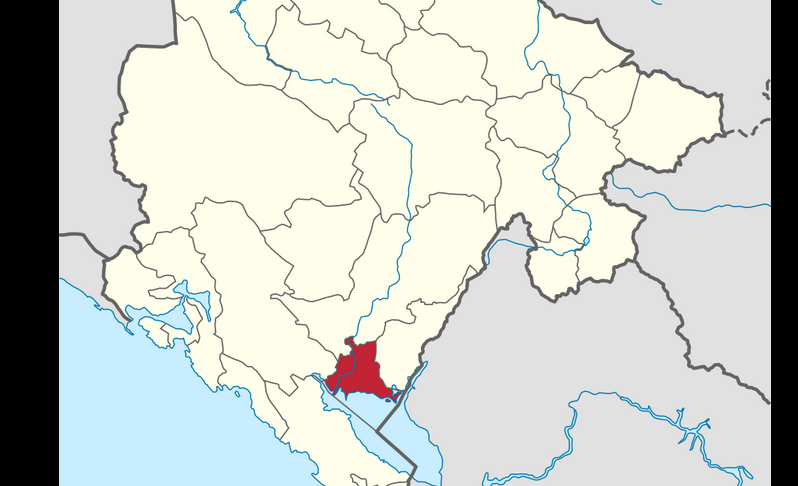
The declaration adopted by the Municipality of Zeta, politically supported by Milan Knežević and pro-Serbian political segments in Montenegro, represents an episode of multidimensional legal, constitutional, diplomatic, and geopolitical significance in the Western Balkans. From a strictly formal legal perspective, this is a symbolic declaration issued by a local self-government unit that produces no international legal effects. However, on the political and strategic level, the act reflects far deeper tensions connected to:
Montenegro’s state identity;
the rivalry between pro-Western and pro-Serbian political forces;
the influence of Russia in the region through Serbia;
as well as the instrumentalization of the issue of Kosovo for political, identity-based, and geopolitical mobilization.
In this sense, the Zeta declaration should not be interpreted as an isolated local incident, but rather as a symptom of a broader process of institutional and ideological polarization that has affected Montenegro following the political changes of 2020.
I. Montenegro’s Constitutional Framework and the Legal Limits of Local Self-Government
The Constitution of Montenegro defines the state as:
sovereign,
civic,
democratic,
unified, and indivisible.[1]
In contemporary constitutional systems, foreign policy is regarded as an exclusive attribute of state sovereignty. This means that only central state institutions:
the Government,
the President,
the Ministry of Foreign Affairs,
and, in certain cases, Parliament,
may represent the state in international relations.
Municipalities are decentralized administrative units whose competences are limited to:
local administration;
urban planning;
municipal development;
public services;
and local territorial matters.[2]
They:
possess no international legal personality;
have no diplomatic competence;
cannot establish international relations on behalf of the state;
and have no authority to recognize or derecognize states.
For this reason, the declaration adopted by Zeta:
has no legal effect whatsoever on Montenegro’s recognition of Kosovo.
Montenegro’s recognition of Kosovo in 2008 remains a sovereign decision of the Montenegrin state and cannot be altered or undermined by a local political act.
From a constitutional perspective, the declaration constitutes:
a declaratory political act without normative force.
However, the real issue does not lie solely in the absence of legal effect, but in the fact that a municipality is attempting to articulate positions on foreign policy, thereby symbolically challenging the state monopoly over international relations.
II. The Principle of Unity in Foreign Policy and the Risk of Institutional Fragmentation
Modern constitutional theory is based on the principle:
“One State – One Foreign Policy.”
This principle guarantees:
diplomatic coherence;
international credibility;
legal certainty;
and the preservation of sovereignty.[3]
If local entities were allowed:
to recognize states;
to reject recognition;
or to conduct autonomous foreign policies,
then the very concept of a unitary state would become fragmented.
It is precisely in this context that the reaction of the Justice and Reconciliation Party (SPP) must be understood. Their reaction was not merely a political polemic against Milan Knežević, but a warning regarding the dangers of relativizing the constitutional order.
When the SPP asked:
“Could a municipality in Sandžak tomorrow declare that it does not recognize Serbia?”,
it raised the issue of institutional precedent.
In constitutional law, political precedents are of extraordinary importance because:
symbolic practices tolerated today,
may evolve into normalized political standards tomorrow.
In this particular case, the SPP argues that:
if municipalities are allowed to interpret foreign policy according to local identities or partisan interests,
then:
state authority is weakened;
the Constitution is relativized;
and narratives of parallel sovereignties emerge.
This concern is particularly sensitive in the Balkans, where the history of the disintegration of Yugoslavia demonstrated that symbolic fragmentation of state authority often precedes deeper political and ethnic crises.
III. International Law and the Absence of International Legal Personality for Municipalities
Under international law, the recognition of states is considered:
a unilateral sovereign act of the state.[4]
Only subjects of international law:
states;
and, in limited circumstances, international organizations,
possess international legal capacity.
Municipalities:
are not subjects of international law;
possess no diplomatic personality;
have no treaty-making power;
and cannot produce international legal consequences.[5]
This principle is grounded in:
the Charter of the United Nations;
the Montevideo Convention (1933);
and universal diplomatic practice.
Therefore:
the Zeta declaration does not affect Kosovo’s international status;
does not alter diplomatic relations between Podgorica and Pristina;
and produces no international legal consequences.
Nevertheless, in diplomacy, even acts without legal effect may produce:
symbolic impact;
reputational consequences;
and destabilizing political effects.
IV. The Real Significance of the Declaration: Symbolic and Identity Dimensions
In the Balkans, political symbolism often carries greater weight than formal legality.
The Zeta declaration:
emotionally mobilizes the Serbian nationalist electorate;
reinforces anti-Kosovo narratives;
challenges Montenegro’s civic identity;
and tests the limits of institutional tolerance within the state.
After 2020, Montenegro entered a new phase of political polarization. For the first time since independence in 2006, traditionally pro-Serbian forces gained substantial institutional influence.
This resulted in:
the strengthening of Serbian identity narratives;
the increased political role of the Serbian Orthodox Church;
the relativization of a distinct Montenegrin identity;
and the expansion of anti-Western rhetoric.[6]
In this environment, Kosovo is used not merely as a foreign policy issue, but as:
an instrument for defining internal political identities.
For pro-Serbian segments:
support for the non-recognition of Kosovo functions as an ideological and identity marker.
For pro-Western forces:
recognition of Kosovo is directly linked to Montenegro’s Euro-Atlantic orientation.
This makes the issue considerably more sensitive than a conventional diplomatic debate.
V. The Geopolitical Dimension: Russia, Serbia, and Strategic Rivalry in the Balkans
Following Montenegro’s accession to NATO in 2017, the country became one of the most sensitive arenas of rivalry between the West and Russia in the Balkans.[7]
For the West:
Montenegro represented the expansion of the Euro-Atlantic security architecture into the Adriatic region.
For Russia:
Montenegro’s NATO membership represented a strategic loss and a limitation of Russian regional influence.
As a result, Moscow intensified investments in:
pro-Russian media networks;
pro-Serbian political structures;
nationalist organizations;
and mechanisms of cultural and religious influence.[8]
These networks operate through:
anti-Western narratives;
identity polarization;
relativization of Kosovo’s statehood;
and promotion of the concept of:
“Srpski svet” (“The Serbian World”).
This concept seeks the political, cultural, and strategic homogenization of Serbian populations across the region.[9]
Although not formally articulated as a territorial project, it creates:
a common political space;
coordinated narratives;
and resistance to Euro-Atlantic integration.
Within this framework, the Zeta declaration can be interpreted as:
part of the symbolic struggle against Kosovo’s recognition and Montenegro’s Western orientation.
VI. The Strategy of “Low-Intensity Destabilization”
Russia rarely operates in the Balkans through direct institutional control. Its model relies on:
local actors;
allied political parties;
media structures;
religious organizations;
and the production of symbolic crises.
In security studies literature, this is referred to as:
“low-intensity destabilization.”[10]
The objective is not necessarily total state control, but rather:
the production of continuous instability;
the weakening of trust in democratic institutions;
the obstruction of Euro-Atlantic integration;
and the creation of a perception that the Balkans remain inherently unstable.
Within this strategy:
symbolic declarations often matter more than actual legal effects.
Such declarations are used for:
testing institutional reactions;
polarizing public opinion;
gradually normalizing anti-Western narratives;
and generating continuous low-intensity political crises.
VII. Kosovo as the Central Node of Nationalist
Mobilization
Kosovo remains:
the most emotionally sensitive issue within Serbian nationalism;
and the most effective instrument for political mobilization across the Serbian political sphere.
Through the Kosovo issue:
anti-Western narratives are generated;
the West is portrayed as “anti-Serbian”;
and strategic proximity with Russia is legitimized.
In this sense, the Zeta declaration:
does not seek legal change;
but rather the consolidation of an alternative political narrative opposed to the Euro-Atlantic order.
VIII. The 2016 Coup Attempt and the Security Dimension
The analysis of Russian influence in Montenegro cannot be understood without reference to the events of 2016, when Montenegrin authorities and Western partners alleged the involvement of structures linked to Russian intelligence services in an attempted coup during parliamentary elections.[11]
According to Montenegrin institutions:
the objective was to prevent NATO accession;
destabilize state institutions;
and alter the country’s strategic orientation.
Although the legal aspects of the case remain politically contested, the episode consolidated the Euro-Atlantic perception that Montenegro represents:
a frontline arena of geopolitical competition in the Balkans.
Consequently:
anti-NATO rhetoric;
the relativization of Kosovo;
and symbolic challenges to the constitutional order,
are frequently analyzed through the prism of Russian-Serbian influence.
IX. Instrumentalization of Local Self-Government and “Gradual Institutional Erosion”
An important element of this strategy is the use of local institutions for:
producing symbolic crises;
gradually challenging central authority;
and normalizing anti-Western discourse.
This represents a form of:
“gradual institutional erosion.”
Rather than directly confronting the state:
micro-political crises are generated;
public opinion is polarized;
institutional responses are tested;
and constitutional order is gradually relativized.
If the state fails to react:
perceptions of institutional weakness emerge.
If the state reacts harshly:
narratives of political victimization are produced.
This makes the strategy particularly effective in the polarized societies of the Western Balkans.
X. Conclusion
From:
constitutional;
international legal;
diplomatic;
and geopolitical perspectives,
the Municipality of Zeta:
has no competence to derecognize Kosovo;
cannot alter Montenegro’s official foreign policy position;
and produces no international legal consequences.
Nevertheless, the real importance of this issue lies in:
the symbolic challenge to state authority;
the instrumentalization of Kosovo for domestic political consumption;
the penetration of anti-Western narratives;
and the strategic rivalry between the Euro-Atlantic project and Russian-Serbian influence in the Balkans.
At its core, this is not a legal crisis regarding Kosovo’s recognition.
Rather, it represents:
a crisis of institutional cohesion, state identity, and Montenegro’s strategic orientation.
In this sense, the case of Zeta is not merely a local political episode, but a reflection of a broader struggle over narrative control, identity formation, and geopolitical influence in the Western Balkans.
Footnotes:
[1] The Constitution of Montenegro and the State Monopoly over Foreign Policy
Montenegro, under its 2007 Constitution, is defined as:
“a civic, democratic, ecological and social justice state, based on the rule of law.”
The Constitution affirms:
the sovereignty of the state;
its unitary and indivisible character;
and the exclusive competence of central institutions in foreign affairs.
In particular:
the President represents the state domestically and internationally;
the Government conducts foreign policy;
and Parliament ratifies international agreements.
No constitutional provision grants municipalities authority over:
recognition of states;
diplomatic relations;
or foreign policy matters.
References:
Constitution of Montenegro (2007), Articles 1, 7, 82, 95, and 100.
Venice Commission, Opinion on the Constitution of Montenegro, CDL-AD(2007)047.
Robert Schütze, European Constitutional Law, Cambridge University Press, 2021.
[2] Local Self-Government and the Limits of Municipal Competence
According to the European Charter of Local Self-Government of the Council of Europe:
municipalities possess administrative and local public competences,
but not sovereign state powers.
The European standard of decentralization is based on the principle:
“subsidiarity without sovereignty.”
This means:
local authorities administer local affairs,
but possess no international legal personality.
Therefore:
municipalities cannot conduct autonomous foreign policy;
cannot recognize or derecognize states;
and cannot produce diplomatic acts with international effect.
References:
European Charter of Local Self-Government, Council of Europe, 1985.
Committee of the Regions, Division of Powers in EU and Candidate States.
Nico Steytler, Local Government and the Constitution, Juta Law, 2005.
Richard Rawlings, Delimiting Governmental Powers, Oxford University Press.
[3] The Principle of “One State – One Foreign Policy”
In modern constitutional theory, foreign policy is considered:
an exclusive attribute of state sovereignty.
The principle:
“One State – One Foreign Policy”
guarantees:
diplomatic coherence;
international credibility;
legal certainty;
and preservation of sovereignty.
Even in federal or decentralized systems, forms of:
paradiplomacy;
regional cooperation;
or local economic diplomacy,
may exist, but not:
recognition of states;
autonomous foreign policy;
or independent positions on international sovereignty issues.
References:
Giovanni Boggero, Constitutional Principles of Foreign Policy, European Constitutional Law Review, 2021.
Brian Hocking, Localizing Foreign Policy, St. Martin’s Press, 1993.
Ivo Duchacek, The Territorial Dimension of Politics, Westview Press, 1986.
John Jackson, Sovereignty, the WTO and Changing Fundamentals of International Law, Cambridge University Press.
[4] Recognition of States in International Law
Under international law:
recognition of states is a unilateral sovereign act.
Only sovereign states:
possess the authority to recognize other states;
establish diplomatic relations;
and produce international legal consequences.
Recognition:
cannot be delegated to municipalities;
cannot be territorially fragmented;
and cannot be relativized by sub-state actors.
References:
Malcolm N. Shaw, International Law, Cambridge University Press, 8th edition, 2017.
James Crawford, The Creation of States in International Law, Oxford University Press, 2006.
Hersch Lauterpacht, Recognition in International Law, Cambridge University Press, 1947.
Stefan Talmon, Recognition of Governments in International Law, Oxford University Press.
[5] The Montevideo Convention and International Legal Personality
The Montevideo Convention (1933) established the classical criteria for statehood:
permanent population;
defined territory;
effective government;
and capacity to enter into international relations.
Municipalities do not fulfill:
the criterion of sovereignty;
nor the capacity for international relations.
Therefore:
they are not considered subjects of international law.
References:
Montevideo Convention on the Rights and Duties of States, 1933.
Ian Brownlie, Principles of Public International Law, Oxford University Press, 2008.
Antonio Cassese, International Law, Oxford University Press.
Rosalyn Higgins, Problems and Process: International Law and How We Use It, Oxford University Press.
[6] Identity Polarization in Montenegro after 2020
Following the 2020 elections, Montenegro entered:
a new phase of identity polarization;
weakening of the pro-Western consensus;
and strengthening of pro-Serbian political forces.
Political discourse increasingly revolved around:
national identity;
the role of the Serbian Orthodox Church;
relations with Serbia;
and attitudes toward Kosovo.
According to Florian Bieber:
“identity polarization in the Balkans creates ideal conditions for external influence and institutional weakening.”
References:
Florian Bieber, The Rise of Authoritarianism in the Western Balkans, Palgrave Macmillan, 2020.
Srđan Darmanović, Montenegro: A Nation Divided, Balkan Insight analyses.
Freedom House, Nations in Transit Reports, Montenegro, 2021–2024.
Dejan Jović, The Balkans in Europe or Europe in the Balkans, Zagreb Journal of International Relations.
[7] NATO Membership and Geopolitical Rivalry
Montenegro’s accession to NATO in 2017:
was viewed as a strategic success for the West;
and a geopolitical loss for Russia.
Through this enlargement:
NATO consolidated its strategic presence in the Adriatic;
while Russia lost an important sphere of influence in the Balkans.
References:
NATO Official Statement, “Montenegro Joins NATO as 29th Ally,” 2017.
Dimitar Bechev, Russia Rising: Putin’s Foreign Policy in the Middle East and Balkans, Yale University Press, 2021.
Mark Galeotti, We Need to Talk About Putin, Penguin Books.
Carnegie Europe Reports on Russian Influence in Southeast Europe.
[8] Mechanisms of Russian Influence in the Balkans
Russian influence in the Balkans is commonly exercised through:
allied political parties;
pro-Russian media outlets;
economic networks;
religious institutions;
and nationalist structures.
The objective is not direct territorial control, but:
obstruction of Euro-Atlantic integration;
weakening of democratic institutions;
and preservation of the Balkans as a geopolitical grey zone.
References:
CSIS, Russian Influence in the Balkans.
NATO StratCom Reports on Russian Hybrid Operations.
Soeren Keil, Multinational Federalism in Bosnia and Herzegovina, Routledge.
European Parliament Reports on Foreign Interference in the Western Balkans.
[9] The Concept of “Srpski svet” (“The Serbian World”)
The concept:
“Srpski svet” (“The Serbian World”)
has been articulated by Serbian nationalist intellectual and political circles as a platform for:
cultural homogenization;
political coordination;
and strategic integration of Serbian populations throughout the region.
Although not officially framed as a territorial expansion project, it promotes:
a common political space;
coordinated narratives;
and resistance to Euro-Atlantic integration.
Several analysts associate this concept with:
a softer contemporary form of pan-Serb nationalism;
and Russian geopolitical doctrines concerning spheres of influence.
References:
Vuk Vuksanović, “The Serbian World,” London School of Economics (LSE), 2022.
Janusz Bugajski, Failed State: A Guide to Russia’s Rupture Strategy in Southeastern Europe, Jamestown Foundation.
Timothy Less, analyses on Serbian regional strategy.
Balkan Insight reports on “Srpski svet”.
[10] “Low-Intensity Destabilization” and Hybrid Warfare
The concept:
“low-intensity destabilization”
describes a strategy aimed at producing:
continuous political crises;
identity tensions;
institutional mistrust;
and societal polarization.
This is achieved through:
media manipulation;
disinformation;
local political actors;
symbolic crises;
and identity conflicts.
In the Balkans, this strategy is frequently associated with:
Russian hybrid warfare;
and the instrumentalization of nationalism for destabilization.
References:
Mark Galeotti, Hybrid War or Gibridnaya Voina?, NATO Defense College Research Paper.
Andrew Wilson, Virtual Politics, Yale University Press.
EU Hybrid Fusion Cell Reports.
Keir Giles, Moscow Rules, Brookings Institution Press.
[11] The 2016 Coup Attempt in Montenegro
In 2016, Montenegrin authorities alleged:
the involvement of structures linked to Russian intelligence services;
and cooperation with Serbian nationalist actors,
in an attempted coup during parliamentary elections.
According to state authorities:
the objective was to prevent NATO accession;
destabilize institutions;
and alter Montenegro’s strategic orientation.
Although the judicial and political dimensions of the case remain debated, the episode:
reinforced perceptions of Russian interference in the Balkans;
and positioned Montenegro at the center of discussions on hybrid warfare in Southeast Europe.
References:
BBC Monitoring Reports on the Montenegro Coup Case.
Atlantic Council analyses on Russian operations in Montenegro.
European Parliament Reports on Russian Influence in the Western Balkans.
Dimitar Bechev, Rival Power: Russia in Southeast Europe, Yale University Press, 2017.
The Land of Leka,23.05.2026
 KARAFILAT QË PËRQAFOJNË “KARIATIDET ”… Kujtime DR. EDUARD A. SKUFI
 Urime për postin e Presidentes, Justinë, çika shtatselvi e Simon Shirokës! Nga Çun Lajçi
 SKIFTER NË SHKREPA- Nga ARIF EJUPI
 KUR RIVALITETI POLITIK I LË VEND INTERESIT TË PËRGJITHSHËM- Nga ARIF EJUPI
 Prokuroria e akuzon Thaçin se ka gënjyer për historinë e UÇK-së – Thaçi duket se u kundërgodit nga intrigat e tij Nga Idriz Morina
 Albin Kurti & opozita duhet të bien dakord për Faton Bislimin, kandidatin për president konsensual propozuar nga kongresmeni JoeDioGuardi & ambasadori Walker Nga Elida Buçpapaj
 Shqipëria në planin rajonal për rikthimin e pyjeve, në fokus Alpet dhe pellgu i Drinit
 Kendi i humorit: I kërkon partnerit të bëjnë përsëri dashuri
 U miratua me 85 vota pro ndarja e re administrative, Shqipëria me 15 bashki më pak, si do funksionojnë! Ekspertët skeptikë: Nuk garanton shërbime për qytetarët
 UGSHPD: TAULANTIT I SHKET GJUHA-Ne jemi palë
 KOSOVA ZGJODHI PRESIDENTEN – TANI DUHET TË ZGJEDHË RRUGËN- Nga Frank Shkreli
 Kosovë, ktheja emrin e vet Kosovës, Dardani- Poezi nga ATDHE GECI