After the declaration of independence in 2008, the Republic of Kosovo faced significant institutional and political challenges. The consolidation of democratic institutions, the creation of an effective governance system, and respect for the Constitution of the country were essential priorities for the new state’s stability.¹ The political process was characterized by a fragile balance between the governing majority and the opposition, with political parties often using various mechanisms to exert pressure and maintain or gain influence on the state agenda.²
One of the most visible instruments of this dynamic was parliamentary blockade, which consisted of:
• Refusal to verify parliamentary mandates;³
• Boycotting votes for the Speaker of the Assembly, Prime Ministers, and the President;⁴
• Non-voting on the budget and international agreements.⁵
These actions directly affected the functioning of institutions and often created tensions at the citizen level, becoming a political pressure instrument aimed at compromise or weakening the winning majority.⁶ The motives of the opposition for using blockades varied: sometimes to prevent institutional functioning, sometimes to hinder specific reforms, such as in the justice sector; and often to provoke new parliamentary elections that could favor their interests.⁷ This phenomenon was not unique to Kosovo; comparative analysis shows that opposition parties in parliamentary democracies often use similar instruments to negotiate political influence or restore the balance of power.⁸ Parliamentary blockades cannot be considered merely bureaucratic obstacles but a political strategy that requires broad institutional and legal understanding.⁹
To understand their impact and how they can be addressed, it is necessary to analyze:
1. The form, causes, and motives of the blockades, as well as the political context after elections.¹⁰
2. The constitutional framework regulating voting and quorum in the Assembly, including the method of electing the President.¹¹
3. International standards and legal precedents providing guidance for managing parliamentary crises.¹²
4. Alternative solutions to prevent blockades, including electronic voting, political arbitration, and the option of direct election of the President by citizens.¹³
1: Form, Causes, and Political Motivation of Parliamentary Blockades
1.1 Forms of Blockades Parliamentary blockades in Kosovo have taken several main forms:
• Refusal to verify parliamentary mandates – prevents the establishment of the Assembly and the start of institutional work.¹⁴
• Boycotting votes for the Speaker of the Assembly, Prime Ministers, and the President – uses quorum and required majority as a political pressure tool.¹⁵
• Refusal to vote on the budget and international agreements – creates financial crisis and social dissatisfaction.¹⁶
1.2 Causes of Blockades
The main cause is linked to the opposition’s political strategy to obstruct the governing majority and seek compromise or influence in the political process after election losses or to protect certain party interests.¹⁷
1.3 Political Motivation The political motives of blockades include:
• Preventing the functioning of institutions to create pressure on the winning majority.¹⁸
• Increasing social and economic dissatisfaction to weaken government legitimacy.¹⁹
• Blocking justice reforms or key policies to control the political agenda.²⁰
• Provoking new parliamentary elections when the majority’s failure could favor the opposition.²¹
2: Constitutional Framework for Electing the President According to Articles 82–85 of the Constitution of the Republic of Kosovo:
• The President is elected by the Assembly through secret ballot in three rounds.²²
• The first rounds require a qualified majority of 80 votes; the third round requires a simple majority of 61 votes.²³
• The minimum quorum for starting and conducting the vote is 80 deputies.²⁴
• In case of failure to elect, the Assembly is dissolved, and new parliamentary elections are held.²⁵
3: International Standards International organizations such as OSCE/ODIHR and the Council of Europe emphasize:
• Quorum and the required majority should ensure legitimacy, not be exploited for political obstruction.²⁶
• Blockades should be resolved through political negotiations and legal mechanisms, respecting the democratic process.²⁷
4: Legal Interpretation and Precedents The decision of the Constitutional Court of Kosovo (2011) on the election of Behgjet Pacolli emphasized that the quorum must be present throughout the procedure. Due to the lack of quorum, the election was declared unconstitutional and resolved through compromise with the election of Atifete Jahjaga.²⁸,²⁹
This precedent underscores the importance of respecting the Constitution for institutional legitimacy.³⁰ 5: Chronology of Blockades and Political Motives (2008–2026)
• 2008: Declaration of independence and the election of Fatmir Sejdiu without obstacles.³¹
• 2011: The election of Pacolli challenged legally; the opposition used refusal to reach political compromise.³²
• 2016: Blockade and boycott against the election of Hashim Thaçi, using quorum as a pressure tool.³³
• 2021: Election of Vjosa Osmani only after participation of opposition deputies to reach minimal quorum.³⁴
• 2025: After February 9 elections, deputies of losing parties refuse to verify mandates.³⁵
• March–August 2025: Refusal to vote for Albulena Haxhiu, the 2026 budget, and international agreements; blocking the vote for Albin Kurti and Glauk Konjufca.³⁶,³⁷
• December 28, 2025: New parliamentary elections; Vetëvendosje wins 51.1% of votes.³⁸
• February 2026: Formation of Kurti 3 Government, budget and institutions unblocked.³⁹
• March 2026: Opposition attempt to block the election of the President due to lack of quorum.⁴⁰
6: Legal Analysis • Quorum ensures legitimacy but can be used as a political pressure tool.⁴¹
• Required majority is a mechanism for consensus but may block the process without compromise.⁴²
• International standards require that legal mechanisms do not prevent the normal functioning of the Assembly and preserve democratic legitimacy.⁴³
7: Legal and Alternative Solutions to Prevent Parliamentary Blockades
7.1 Constitutional Mechanisms
• Dissolution of the Assembly in case of failure to elect the President within procedures and without quorum.⁴⁴
• Continuation of sessions to ensure completion of the voting process.⁴⁵
• Assembly Rules allow setting mandatory deadlines and internal procedures to avoid delays.⁴⁶
7.2 Alternative Legal Solutions
• Electronic or remote voting to ensure quorum.⁴⁷
• Political arbitration mechanisms and interparty committees for compromise.⁴⁸
• Procedural sanctions for deputies obstructing the Assembly.⁴⁹
7.3 Option of Direct Presidential Elections Democratic advantages:
• Reduces the impact of parliamentary blockades.⁵⁰
• Increases democratic legitimacy with a direct mandate from citizens.⁵¹
• Ensures transparency and political accountability.⁵²
Legal and constitutional implications:
• Review of Presidential powers to maintain balance of powers.⁵³
• Provision for majority and voting rounds for full legitimacy.⁵⁴
• Backup procedures in case of no majority in the first round.⁵⁵
• Maintaining balance between executive and legislative powers.⁵⁶
International standards:
• OSCE/ODIHR and Council of Europe emphasize democratic legitimacy and institutional stability.⁵⁷,⁵⁸
• Practices in France, Ireland, and Austria show that direct elections minimize the impact of parliamentary blockades.⁵⁹
Recommendations for Kosovo:
• Draft constitutional amendments for term, powers, and limitations of the President.⁶⁰
• Clear electoral procedures, including a second round and absolute majority.⁶¹
• Ensuring balance of powers.⁶²
• Integration of legal and administrative control mechanisms.⁶³
8: Conclusion
The process of electing the President in Kosovo (2008–2026) illustrates the importance of quorum, required majority, and adherence to the Constitution. Parliamentary blockades were politically motivated to pressure the majority, but constitutional mechanisms and legal precedents ensured the unblocking of institutions and democratic functioning of the state. Alternative solutions, including electronic voting, political arbitration, and direct election of the President by citizens, can provide mechanisms to avoid future blockades and strengthen institutional stability.⁶⁴
Footnotes
1. Constitution of the Republic of Kosovo, Articles 82–85. 2. Rules of Procedure of the Assembly of the Republic of Kosovo, provisions on continuous sessions. 3. Ibid., rules on deadlines and mandatory votes. 4. OSCE/ODIHR, E-Voting Guidelines for Parliamentary Systems. 5. Council of Europe, Political Mediation in Parliamentary Crises, 2019. 6. OSCE/ODIHR, Code of Good Practice in Electoral Matters, Article II.2. 7. Comparative studies: France, Ireland, USA – Legitimacy and Stability in Presidential Elections. 8. OSCE/ODIHR, Direct Presidential Elections Guidelines. 9. Constitutional analysis of Kosovo, the role of the President as a figure of unity. 10. Voting procedures and rounds, international practice. 11. Backup mechanisms in case of no majority. 12. Analysis of balance among powers. 13. OSCE/ODIHR, Direct Presidential Elections Guidelines. 14. Council of Europe, Guidelines on Presidential Elections and Institutional Stability, 2021. 15. Comparative studies: France, Ireland, Austria. 16. Legal analysis and recommendations for Kosovo. 17. Declaration of independence and election of Fatmir Sejdiu, 2008. 18. Election of Behgjet Pacolli and legal challenges, 2011. 19. Blockade and boycott against Hashim Thaçi’s election, 2016. 20. Election of Vjosa Osmani and participation of opposition deputies, 2021. 21. After February 9 elections, refusal to verify mandates, 2025. 22. Refusal to vote for Albulena Haxhiu, March–August 2025. 23. Blocking the vote for Albin Kurti and Glauk Konjufca, March–August 2025. 24. New parliamentary elections; Vetëvendosje wins 51.1% of votes, December 28, 2025. 25. Opposition attempt to block the election of the President, March 2026. 26. Analysis of quorum as a political pressure instrument. 27. Required majority and mechanisms for consensus. 28. International standards for normal Assembly functioning. 29. Constitutional Court decisions on failure to elect the President. 30. Continuation of sessions to ensure voting. 31. Deadlines and internal procedures according to Assembly Rules. 32. Electronic or remote voting to ensure quorum. 33. Political arbitration mechanisms and interparty committees for compromise. 34. Procedural sanctions for deputies obstructing the Assembly. 35. Reducing the impact of parliamentary blockades through direct presidential election. 36. Increasing democratic legitimacy with direct mandate from citizens. 37. Ensuring transparency and political accountability. 38. Review of Presidential powers to maintain balance of powers. 39. Provision for majority and voting rounds for full legitimacy. 40. Backup procedures in case of no majority in the first round. 41. Maintaining balance between executive and legislative powers. 42. Democratic legitimacy and institutional stability according to OSCE/ODIHR. 43. Practice of France for direct Presidential elections. 44. Practice of Ireland for direct Presidential elections. 45. Practice of Austria for direct Presidential elections. 46. Drafting constitutional amendments for term, powers, and limitations of the President. 47. Clear electoral procedures, including second round and absolute majority. 48. Ensuring balance of powers. 49. Integration of legal and administrative control mechanisms. 50. Historical context of refusal to verify mandates. 51. Boycotting votes for Speaker, Prime Ministers, and President. 52. Refusal to vote on budget and international agreements. 53. Comparative analysis with parliamentary democracies. 54. Political pressure instrument for compromise. 55. International standards for quorum and majority. 56. Legal decisions of the Constitutional Court of Kosovo. 57. Precedents for presidential election. 58. Impact of blockades on institutional legitimacy. 59. Alternative solutions to avoid blockades. 60. Electronic voting and arbitration mechanisms. 61. Option of direct presidential election. 62. Democratic advantages of direct election. 63. Legal and constitutional implications of direct election. 64. Recommendations for Kosovo based on international standards and legal precedents.
The Land of Leka; 06.03.2026

 KARAFILAT QË PËRQAFOJNË “KARIATIDET ”… Kujtime DR. EDUARD A. SKUFI
 Urime për postin e Presidentes, Justinë, çika shtatselvi e Simon Shirokës! Nga Çun Lajçi
 SKIFTER NË SHKREPA- Nga ARIF EJUPI
 KUR RIVALITETI POLITIK I LË VEND INTERESIT TË PËRGJITHSHËM- Nga ARIF EJUPI
 Prokuroria e akuzon Thaçin se ka gënjyer për historinë e UÇK-së – Thaçi duket se u kundërgodit nga intrigat e tij Nga Idriz Morina
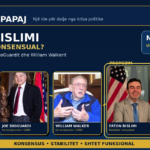 Albin Kurti & opozita duhet të bien dakord për Faton Bislimin, kandidatin për president konsensual propozuar nga kongresmeni JoeDioGuardi & ambasadori Walker Nga Elida Buçpapaj
 BIRN: Shqipëria, e papërgatitur për një ndryshim të rregullave të lojës nga BE
 Lisat nuk ikën- Poezi të reja nga Ismet TAHIRAJ
 Kamberi i përgjigjet Vuçiqit: “Nuk kuptoj çfarë po të shqetëson nga angazhimi im për shqiptarët”
 Shqipëria në planin rajonal për rikthimin e pyjeve, në fokus Alpet dhe pellgu i Drinit
 Kendi i humorit: I kërkon partnerit të bëjnë përsëri dashuri
 U miratua me 85 vota pro ndarja e re administrative, Shqipëria me 15 bashki më pak, si do funksionojnë! Ekspertët skeptikë: Nuk garanton shërbime për qytetarët