Brdo-Brijuni Process and Croatia’s Decision
The President of Croatia, Zoran Milanović, has decided to exclude Serbian President Aleksandar Vučić from the upcoming Brdo-Brijuni Process summit, arguing that current conditions do not exist for his participation in an environment where political tensions between the two countries are high. This decision reflects concerns over Vučić’s bellicose rhetoric toward Croatia and other neighbors, setting a precedent for conditioning regional dialogue on behavior and adherence to democratic standards and neighborly respect.
1. Introduction
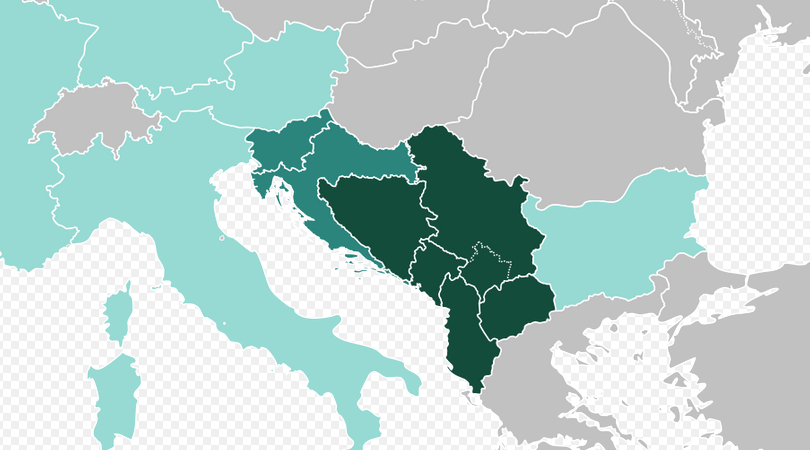
The Western Balkans hold strategic importance for the European Union and Euro-Atlantic structures due to the legacy of the conflicts of the 1990s, challenges in the rule of law, and threats to neighboring countries¹. The integration of regional countries is closely linked to the Copenhagen Criteria, which require political stability, functional democracy, rule of law, and respect for human rights².
2. Regional Processes for Integration
2.1 Brdo-Brijuni Process
The Brdo-Brijuni Process is a joint initiative of Croatia and Slovenia that aims to:
• Bring the Western Balkans closer to the EU³.
• Strengthen regional political cooperation⁴.
• Address issues inherited from the conflicts and historical legacy⁵.
The most recent summit was held in Tirana in the fall of 2025. However, the upcoming cancellation by Croatia is linked to the lack of conditions for the participation of Serbian President Aleksandar Vučić, following political tensions and his statements against Croatia⁶.
2.2 Berlin Process
The Berlin Process, initiated by Germany and Austria, includes Croatia, Slovenia, and other EU countries, serving as a replacement for the Brdo Process at the level of prime ministers. Its objectives are economic cooperation, political dialogue, regional security, and continued EU integration⁷.
2.3 Rama–Vučić Cooperation
The cooperation between Albanian Prime Minister Edi Rama and Serbian President Aleksandar Vučić has two dimensions:
• Formal: participation in regional dialogue and EU initiatives⁸.
• Practical: attempts to maintain Russian influence and expand ties outside EU standards, violating transparency and democratic principles⁹.
3. EU Funds and Their Misuse
The European Union has provided funds to Serbia through the Instrument for Pre-Accession Assistance (IPA), intended for democratic reforms, rule of law, and economic development¹⁰.
Reports indicate that these funds were misused for:
• Expanding espionage networks in neighboring states¹¹.
• Armament beyond EU standards, becoming a threat to neighbors¹².
• Regional destabilizing activities and reinforcing Russian influence¹³.
4. War Crimes and Historical Legacy
The legacy of the 1990s conflicts significantly impacts regional stability:
• Genocide and war crimes in Bosnia and Herzegovina caused massive civilian casualties and were prosecuted by the ICTY¹⁴.
• The killings of civilians during the Siege of Sarajevo included children and women; these were documented by Human Rights Watch and ICTY¹⁵.
• Public reports and documentaries show that Aleksandar Vučić was present in Sarajevo during the sniper attacks, where civilians, including children, were killed¹⁶.
• This legacy has created significant political sensitivity and influences reconciliation processes and mutual trust among neighbors¹⁷.
5. Political Rhetoric and Threats to Neighbors
President Vučić and affiliated media have conducted campaigns against Croatia, Kosovo, and Albania, accusing these countries of revolutionary activity and military threats¹⁸. This has increased tensions and made political conditionality and constructive dialogue essential within the EU framework¹⁹.
6. EU Sanctions and Conditionality
• The EU has imposed sanctions on Serbia and Kosovo for violations of democratic standards and threats to neighbors²⁰.
• To advance in integration, Serbia must fulfill clear phases:
• Demilitarization and compliance with arms standards²¹.
• Termination of destabilizing relations with non-EU countries²².
• Full democratization and respect for the rule of law²³.
Only after meeting these conditions can real paths for EU accession open.
7. Conclusions and Perspectives
Sustainable EU integration of the Western Balkans requires:
1. Normalization of inter-neighbor relations and adherence to democratic standards.
2. Transparent and responsible use of international funds.
3. Functional democracy and respect for the rule of law.
4. Effective fight against corruption and organized crime.
Meeting these criteria is essential to ensure regional stability, peace, and prosperity²⁴²⁵.
Footnotes:
1. European Commission, Enlargement Strategy and Main Challenges 2025, Brussels, 2025, https://ec.europa.eu/enlargement.
2. European Council, Copenhagen Criteria, 1993, https://www.consilium.europa.eu/en/council-eu/.
3. Jutarnji List, “Brdo-Brijuni Summit Canceled for Vučić’s Participation,” Zagreb, 20 March 2026, https://www.jutarnji.hr/.
4. Balkan Insight, “Vučić Media Campaign Against Croatia,” 15 January 2025, https://balkaninsight.com/.
5. Berlin Process Official Documents, Berlin Process Secretariat, 2018–2025, https://www.berlinprocess.info/.
6. Ibid.
7. European Commission, Pre-accession Conditionality for Western Balkans, Brussels, 2024, https://ec.europa.eu/enlargement-policy.
8. European Commission, Western Balkans Dialogue Reports, Brussels, 2024, https://ec.europa.eu/enlargement.
9. Balkan Insight, “Serbia–Albania Cooperation and Russian Influence,” 10 June 2023, https://balkaninsight.com/.
10. European Union Instrument for Pre-Accession Assistance (IPA) Reports, 2015–2023, https://ec.europa.eu/neighbourhood-enlargement/funding.
11. Balkan Insight, “Misuse of EU Funds for Espionage and Armament in Serbia,” 2023–2025, https://balkaninsight.com/.
12. Ibid.
13. Ibid.
14. ICTY (International Criminal Tribunal for the former Yugoslavia), Case Files, 1993–2017, United Nations Security Council Resolution 827, https://www.icty.org/.
15. Human Rights Watch, Siege of Sarajevo: Civilian Casualties Report, 1992–1996, https://www.hrw.org/.
16. Domagoj Margetić, “Public Reports and Documentaries Showing Aleksandar Vučić Present in Sarajevo During the Siege,” 2023–2025, https://www.ansa.it/, https://www.evropaelire.org/.
17. Amnesty International, Western Balkans Human Rights Reports, London, 2024, https://www.amnesty.org/.
18. Balkan Insight, “Vučić Rhetoric Against Neighbors,” 2025, https://balkaninsight.com/.
19. Ibid.
20. European Commission, Sanctions Policy for Western Balkans, Brussels, 2024, https://ec.europa.eu/enlargement.
21. European Commission, Arms Control and Pre-accession Requirements, Brussels, 2024, https://ec.europa.eu/enlargement.
22. European Commission, Western Balkans External Relations Guidelines, Brussels, 2024, https://ec.europa.eu/enlargement.
23. European Commission, Rule of Law Reports, Brussels, 2024, https://ec.europa.eu/enlargement.
24. Ibid.
25. Ibid.
The Land of Leka; 31.03.2026
 Betimi i një guerili- Nga ARIF EJUPI
 Dëshmia në hetuesi e Kreshnik Tartarit, ish-trajnerit të volejbollit të ‘Dinamos’: Feçor Shehu, që dinte interesimet e Skënderit për Silva Turdiun, s’më ka thënë në ndonjë rast, që unë ta pengoja këtë gjë
 Harresa ndaj atyre që dhanë jetën për çlirimin e vendit është mëkat i pafalshëm- Nga ARIF EJUPI
 BIRN: Kush fshihet pas resortit të familjes Trump në Shqipëri Nga Vladimir Karaj
 “IK BYTHËLËPIRËSI I OLIGARKËVE !”- Nga SAMI MILLOSHI
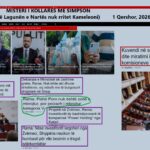 UGSHPD: MISTERI I KOLLARES ME SIMPSON (Në Lagunën e Nartës nuk rritet Kameleoni)
 Matrioshkat e Zvërnecit – Nga Lindita Çela
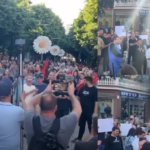 Qytetarët dalin në prtestë edhe në Korçë- Thirrje për largimin e Ramës: Ti dogje rininë, sot të djeg rinia ty
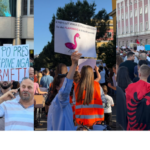 “Di gjë ka ilaç kundër helmit të gjakpirësve” Pankartat pikante në protestë, qytetarët: Atdheu nuk është në shitje! Edi Rama dorëhiqu
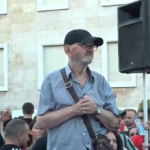 “Mes jush ka shumë dashuri” Aktori Mehdi Malkaj përlotet në protestë: Kanë fshirë qelbësirllëqet mbi kurrizin tonë, por sot…
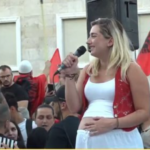 E reja shtatzënë në protestë: Jam këtu për vajzën time dhe të ardhmen ne Shqipërisë
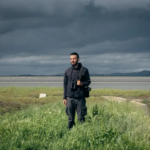 “Në Zvërnec duan të krijojnë një qytet me 10 mijë dhoma”, aktivisti Vorpsi: Rrezikohen 200 lloje shpendësh! Foleja e breshkave ishte vetëm 100 metra nga kantieri