In the light of Abraham Lincoln and the doctrine of constitutional democracy
Abstract
This article addresses popular sovereignty as a fundamental principle of the constitutional order in the Republic of Kosovo and as a structural limitation on the exercise of political power. Drawing on the political philosophy of Abraham Lincoln, the classical doctrine of the social contract, and contemporary principles of constitutionalism, the study argues that sovereignty is not transferred to representative institutions but remains permanently vested in the people as the source of state legitimacy. The article also analyzes the role of the Constitutional Court and the legal limits of political mandate within the constitutional order of Kosovo.
I. Introduction
Popular sovereignty is the fundamental principle upon which every democratic constitutional order is built. It establishes that the source of state authority does not lie in institutions but in citizens as the original holders of political power.¹
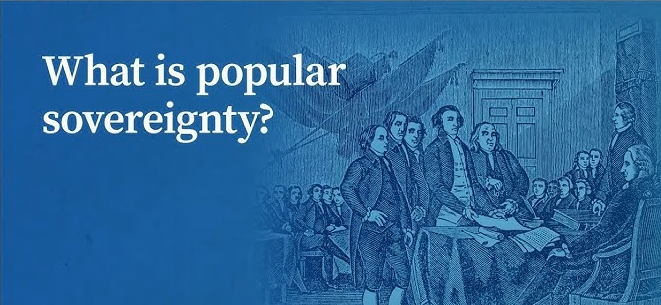
In the Western political tradition, Abraham Lincoln articulated this principle in a paradigmatic way in the Gettysburg Address, defining democracy as government “of the people, by the people, for the people.”² This formulation has become a normative reference point of modern democracy.
In the context of the Republic of Kosovo, this principle acquires a direct legal character, as the Constitution places the people as the source of state sovereignty.³
II. Sovereignty as a Constitutional Norm
In modern constitutional theory, sovereignty is not an abstract political concept but a binding legal norm. Hans Kelsen describes the state as a system of hierarchical norms, where the Constitution stands at the top of the legal order.⁴
From this follows that:
institutions are not the source of sovereignty;
they are legal products of it;
and they are limited by the Constitution.
This structure ensures that public power does not become uncontrolled authority.
III. Lincoln and the Nature of Political Mandate
In Lincoln’s philosophy, government is a “public trust” rather than political property.⁵
This implies that its legitimacy depends on the continuous consent of the governed and its service to the public interest.
According to Harry Jaffa, this constitutes the moral foundation of democratic governance, where power is justified only as long as it respects the natural equality of citizens.⁶
IV. The Constitution of Kosovo and the Structure of Sovereignty
The Constitution of the Republic of Kosovo explicitly provides:
“Sovereignty of the Republic of Kosovo derives from the people, belongs to the people and is exercised in accordance with the Constitution.”⁷
This formulation establishes a clear legal structure:
the people as the source;
institutions as the exercisers;
the Constitution as the limit.
This is an expression of the principle of constitutional supremacy.⁸
V. Limits of Political Representation
In constitutional democracy, the representative mandate is limited and does not constitute a transfer of sovereignty.
Ronald Dworkin emphasizes that democracy is not merely majority rule, but a system constrained by constitutional rights and fundamental legal principles.⁹
Therefore:
representatives cannot alter the constitutional structure of the state;
they cannot act beyond delegated competencies;
and they cannot avoid constitutional review.
VI. The Role of the Constitutional Court
The Constitutional Court of the Republic of Kosovo is the ultimate authority for interpreting the Constitution and ensuring the constitutional order.¹⁰
It guarantees:
the supremacy of the Constitution;
control over political power;
and protection of the separation of powers.
This role is essential for the functioning of the rule of law.
VII. Political Context and Challenges of Sovereignty
In Kosovo’s political practice, international dialogue processes and political agreements create tension between:
the need for political compromise;
and the obligation to preserve the constitutional order.
Under international law, no agreement may produce legal effects if it conflicts with the fundamental constitutional norms of the state.¹¹
VIII. Democratic Accountability
Popular sovereignty is realized not only through elections but through continuous control of public power.
Its instruments include:
free elections;
parliamentary oversight;
the constitutional judiciary;
free media;
and civil society.
Bruce Ackerman describes this as a continuous process of constitutional legitimacy.¹²
IX. Theoretical and International Dimension
Modern constitutional doctrine considers popular sovereignty as interdependent with the principle of the rule of law.
The Venice Commission emphasizes that functional democracy requires limiting majority power through constitutional constraints.¹³
Meanwhile, the ICCPR guarantees the right to political participation as a fundamental international right.¹⁴
Conclusion
Popular sovereignty in the Republic of Kosovo is a fundamental constitutional norm rather than merely a political concept. It defines the source of state legitimacy, limits the exercise of power, and ensures democratic control over institutions.
In the spirit of Abraham Lincoln, democracy remains stable only when political power remains connected to the sovereign people and when institutions operate within constitutional limits.
Footnotes:
¹ Hans Kelsen, General Theory of Law and State (Harvard University Press, 1945), 181–196.
Kelsen develops the theory of the state as a hierarchical normative system in which the validity of every legal norm derives from a higher norm, up to the Constitution as the supreme act. This concept shifts sovereignty from political organs to the normative structure of the legal order, establishing the principle of legality as the foundation of the modern state.
² Abraham Lincoln, Gettysburg Address (1863), in Roy P. Basler (ed.), Collected Works of Abraham Lincoln, Vol. VII (1953), 22–23.
The speech represents the clearest articulation of popular sovereignty in the American political tradition, linking the legitimacy of government to the will of the citizens and the principle of political equality. This text is considered a foundation of modern representative democracy.
³ Constitution of the Republic of Kosovo (2008), Article 2.
This article establishes popular sovereignty as the source of state power and sets the principle of its exercise in accordance with the Constitution, thereby creating a model of constitutionally limited sovereignty.
⁴ Hans Kelsen, Pure Theory of Law (1967), 216–224.
In this work, Kelsen develops the “pure theory of law,” according to which the legal system must be analyzed separately from morality and politics. The Constitution represents the final point of legal validity within the normative order.
⁵ Abraham Lincoln, First Inaugural Address (1861).
In this address, Lincoln emphasizes that the unity of the American state is a constitutional and moral obligation, underlining that government is not a temporary political agreement but a binding legal structure for preserving state order.
⁶ Harry V. Jaffa, Crisis of the House Divided (University of Chicago Press, 1959), 308–315.
Jaffa interprets Lincoln as a political thinker who connects the Declaration of Independence with the constitutional order, arguing that the natural equality of human beings is the normative basis of political legitimacy and limitation of power.
⁷ Constitution of Kosovo (2008), Article 2.
The repetition of this article emphasizes its function as a foundational norm of the constitutional order, defining the source of sovereignty and the structure of its institutional exercise.
⁸ Constitution of Kosovo (2008), Article 16.
This article establishes the supremacy of the Constitution over any other legal and institutional act, thereby establishing the principle of normative hierarchy within Kosovo’s legal order.
⁹ Ronald Dworkin, Freedom’s Law: The Moral Reading of the American Constitution (Harvard University Press, 1996), 15–38.
Dworkin develops the concept of moral constitutional interpretation, according to which constitutional rights have normative content that limits majority discretion and ensures the protection of the individual.
¹⁰ Constitution of Kosovo (2008), Article 112.
This article grants the Constitutional Court the competence of final interpretation of the Constitution and the guarantee of constitutional order, establishing it as the supreme interpretative body within the legal system.
¹¹ Vienna Convention on the Law of Treaties (1969), Article 27.
This article provides that states may not invoke internal law to justify failure to perform treaty obligations, reinforcing the principle of pacta sunt servanda in international public law.
¹² Bruce Ackerman, We the People: Foundations (Harvard University Press, 1991).
Ackerman develops the theory of “constitutional moments,” according to which fundamental constitutional changes occur through political mobilization of the people and not solely through ordinary institutional procedures.
¹³ Venice Commission, Rule of Law Checklist (Council of Europe, 2016).
This document sets out core standards of the rule of law, including legality, legal certainty, separation of powers, and judicial review as essential elements of constitutional democracy.
¹⁴ International Covenant on Civil and Political Rights (1966), Article 25.
This article guarantees the right to participate in public affairs, the right to vote, and to be elected under conditions of freedom and equality, forming a universal standard of representative democracy.
The Land of Leka,05.06.2026

 Betimi i një guerili- Nga ARIF EJUPI
 Dëshmia në hetuesi e Kreshnik Tartarit, ish-trajnerit të volejbollit të ‘Dinamos’: Feçor Shehu, që dinte interesimet e Skënderit për Silva Turdiun, s’më ka thënë në ndonjë rast, që unë ta pengoja këtë gjë
 Harresa ndaj atyre që dhanë jetën për çlirimin e vendit është mëkat i pafalshëm- Nga ARIF EJUPI
 BIRN: Kush fshihet pas resortit të familjes Trump në Shqipëri Nga Vladimir Karaj
 “IK BYTHËLËPIRËSI I OLIGARKËVE !”- Nga SAMI MILLOSHI
 UGSHPD: MISTERI I KOLLARES ME SIMPSON (Në Lagunën e Nartës nuk rritet Kameleoni)
 Matrioshkat e Zvërnecit – Nga Lindita Çela
 Qytetarët dalin në prtestë edhe në Korçë- Thirrje për largimin e Ramës: Ti dogje rininë, sot të djeg rinia ty
 “Di gjë ka ilaç kundër helmit të gjakpirësve” Pankartat pikante në protestë, qytetarët: Atdheu nuk është në shitje! Edi Rama dorëhiqu
 “Mes jush ka shumë dashuri” Aktori Mehdi Malkaj përlotet në protestë: Kanë fshirë qelbësirllëqet mbi kurrizin tonë, por sot…
 E reja shtatzënë në protestë: Jam këtu për vajzën time dhe të ardhmen ne Shqipërisë
 “Në Zvërnec duan të krijojnë një qytet me 10 mijë dhoma”, aktivisti Vorpsi: Rrezikohen 200 lloje shpendësh! Foleja e breshkave ishte vetëm 100 metra nga kantieri