The electoral process in Serbia has historically reflected deep challenges in local democracy and the rights of ethnic groups and minorities. Although laws and international instruments exist to guarantee free elections and equal participation, the reality on the ground shows structural interference, violence, and marginalization of indigenous and historical communities.
The 2026 local elections, held in cities such as Aranđelovac, Bajina Bašta, Bor, Kladovo, Knjaževac, Kula, Lučani, Majdanpek, Sevojno, and Smederevska Palanka, revealed a significant gap between formal legitimacy and actual democracy¹. Reports from OSCE, CRTA, and the Council of Europe document incidents of violence, manipulation of electoral lists, pressure on voters, and obstacles for observers and indigenous communities.
This paper critically examines the role of governing structures, including Aleksandar Vučić and Aleksandar Vulin, and pro-Russian influence in local and national politics.
It highlights violations of international conventions and OSCE/ODIHR standards, including the Framework Convention for the Protection of National Minorities (1995), the European Charter for Minority Rights (1992), and the UN Declaration on the Rights of Indigenous Peoples (2007).
The paper aims to place the reader in a clear historical, institutional, and critical framework, emphasizing that concerns about democracy in Serbia are not merely technical electoral issues, but reflect a systemic phenomenon affecting the right to political participation, education in the mother tongue, access to media, and representation in administration.
This study seeks to provide an overview, serving as a tool for scholars, activists, international observers, and local policymakers to understand and address the challenges of democracy for Albanians indigenous to Eastern Kosovo and Sandžak, Hungarians, Germans in Vojvodina, and minority rights in Serbia.
Introduction
The local elections in Serbia, held in 2026 in cities such as Aranđelovac, Bajina Bašta, Bor, Kladovo, Knjaževac, Kula, Lučani, Majdanpek, Sevojno, and Smederevska Palanka, were characterized by heightened political tensions and systematic violations of democratic standards¹. The electoral process was accompanied by incidents of violence, covert interference, manipulation of electoral lists, and accusations of vote-buying². These elements reflect a gap between formal legitimacy and actual democracy in Serbia.
This article provides a detailed overview, including:
• Electoral incidents and irregularities.
• Political participation and restrictions affecting indigenous and historical communities.
• The role of governing structures such as Aleksandar Vučić and Aleksandar Vulin and pro-Russian influence.
• Violations of laws and international conventions which Serbia has failed to implement.
1. Electoral Incidents and Irregularities
1.1 Violence and Intimidation
In cities such as Bor, Bajina Bašta, and Kula, independent observers reported a series of physical violence incidents, including:
• Parallel lists and manipulation of polling stations³.
• Organized attacks on observers and voters by masked individuals with political ties⁴.
• Direct obstacles to the work of local and independent media⁵.
Rasha Nedeljkov, head of the CRTA mission, stated:
*“The basic security of observers, activists, and journalists is not guaranteed by the Ministry of Internal Affairs, which sends a very serious signal regarding the lack of election freedom”*⁶.
Specific incidents include:
• Bor: Physical attacks in 3 out of 10 polling stations, with the presence of masked gangs linked to local SNS structures⁷.
• Kula: Parallel lists and open clashes between opposition activists and violent elements, resulting in obstruction of voting freedom⁸.
• Bajina Bašta: Violence against journalists and international and national observers, including blocking polling stations⁹.
1.2 Manipulation of Lists and Vote-Buying
OSCE/ODIHR and CRTA reports highlighted suspected practices of electoral list manipulation and pressure on voters:
• Changes to voter registers and arbitrary exclusions of indigenous communities¹⁰.
• Offering material incentives in exchange for support for ruling parties¹¹.
• Obstructions to observers monitoring polling stations, particularly in regions with Albanian populations in Preševo Valley and Sandžak¹².
2. Political Participation of Indigenous Communities
2.1 Albanians in Preševo Valley and Sandžak
Albanians are an indigenous community with centuries-long historical presence in Serbia. They face systematic challenges that hinder political and cultural participation:
• Language and education: Restrictions on using the mother tongue in schools and local administration¹³.
• Political representation: Insufficient participation in local and central bodies, with pressure during elections¹⁴.
• Political marginalization: OSCE/CRTA monitoring identified specific obstacles at polling stations where Albanian populations are dominant¹⁵.
2.2 Hungarians and Germans in Vojvodina
• Hungarians: Political participation is limited by lack of equal representation in administration and obstacles to using the mother tongue¹⁶.
• Germans: A historically reduced community after WWII, facing vulnerabilities and obstacles to representation in local institutions and cultural activities¹⁷.
These situations illustrate the clear gap between formal legitimacy and actual democracy in Serbia.
3. The Role of Aleksandar Vučić and Aleksandar Vulin
Aleksandar Vučić and governing structures have used hybrid instruments to manipulate the electoral process:
• Vulin’s pro-Russian political subject: Aleksandar Vulin established a pro-Russian political entity influencing local structures and favoring ruling parties¹⁸.
• Meetings with Sergey Lavrov: Cooperation with the Russian diplomat strengthened pro-Russian influence in local and national politics¹⁹.
• Opposition marginalization: Opposition and indigenous communities were prevented from effective political participation²⁰.
This political and external influence has undermined democratic standards and equal political participation.
4. Violations of Laws and International Conventions
Serbia has violated several well-known international instruments:
• Framework Convention for the Protection of National Minorities (1995): Restrictions on using mother tongue, lack of equal representation in local governance²¹.
• UN Declaration on the Rights of Indigenous Peoples (2007): Disrespect for cultural autonomy and political participation²².
• European Charter for Minority Rights (1992): Lack of protection of equal participation and cultural rights²³.
• OSCE/ODIHR standards for free and fair elections: Violence at polling stations, parallel lists, pressure on voters and observers²⁴.
OSCE, CRTA, and Council of Europe reports indicate Serbia has failed to ensure free and fair elections²⁵.
5. Limitations in Education, Media, and Administration
• Education: Indigenous communities lack equal access to schools with instruction in their mother tongue²⁶.
• Media: Favoring pro-government media limits community access to independent information²⁷.
• Administration: Albanians, Hungarians, and Germans face administrative barriers and reduced representation in local institutions²⁸.
6. Conclusions
Local elections in Serbia demonstrate a persistent tension between formal legitimacy and real democratic standards. Indigenous and historical communities face obstacles in political participation, language, education, and political representation. Pro-Russian influence and the use of hybrid instruments by governing structures undermine the democratic process.
Rigorous implementation of laws and international conventions, independent monitoring, and legal mechanisms are essential to guarantee equal rights and free elections.
Footnotes:
1. CRTA, “Election Observation Mission Report – Serbia Local Elections 2026”. The report includes monitoring of polling stations in Aranđelovac, Bajina Bašta, Bor, Kladovo, Knjaževac, Kula, Lučani, Majdanpek, Sevojno, and Smederevska Palanka, documenting physical violence, parallel lists, and interference by masked individuals.
2. RTS, “Vučić announces local election victory in Serbia”, 2026. Summarizes election results and public statements by President Aleksandar Vučić regarding the SNS-led coalition.
3. CRTA, “Report on Electoral Incidents”, 2026. Documents physical violence, obstruction of observers, attacks, and illegal interference on election day.
4. Ibid. Refers to the same report regarding violence and intimidation of voters and observers.
5. RTS and local reporting from Bor, Bajina Bašta, and Kula, 2026. Documentation of attacks by masked individuals, presence of gangs, and violations of electoral procedures.
6. Statement by Rasha Nedeljkov, Head of CRTA Mission, 2026. Notes lack of security for journalists and activists, highlighting threats to election freedom and transparency.
7. OSCE/ODIHR, “Election Observation Mission Report – Serbia Local Elections 2026: Bor Center”, 2026. Detailed report on violence and irregularities at Bor polling stations, including obstacles for international observers.
8. OSCE/ODIHR, “Election Observation Mission Report – Serbia Local Elections 2026: Kula Center”, 2026. Analysis of violations, including list manipulation and minimal vote differences.
9. CRTA, “Monitoring Media and Security in Bajina Bašta”, 2026. Report on community access restrictions in media and pressure on observers and voters.
10. OSCE, “Minority Rights Report – Albanians in Presevo Valley”, 2025. Analysis of political participation, mother tongue access, and Albanian representation in local administration.
11. Ibid. Reporting on administrative obstacles and political pressure on Albanians during local elections.
12. Ibid. Documentation of restrictions in education and use of mother tongue in institutions.
13. OSCE, “Language and Education Rights of Minorities in Serbia”, 2025. Report on mother tongue and education access for indigenous and historical communities.
14. Ibid. Includes data on obstacles in administration and political representation.
15. CRTA, “Report on Participation of Indigenous Communities in Elections”, 2026. Documents obstacles for Albanians, Hungarians, and Germans in political participation and the electoral process.
16. OSCE, “Minority Communities – Hungarians in Vojvodina”, 2025. Report on the status of Hungarians in education, mother tongue, media, and political representation.
17. OSCE, “Minority Communities – Germans in Vojvodina”, 2025. Analysis of the status of Germans after WWII, including marginalization and obstacles to political and cultural participation.
18. Media and public reports on Aleksandar Vulin’s pro-Russian political subject, Serbia, 2025. Includes the creation of the subject and pro-Russian political activities.
19. RTS and international media, “Aleksandar Vulin – Sergey Lavrov Meetings”, 2025–2026. Documentation of diplomatic and political cooperation with Russia.
20. Centre for European Studies, “Influence of Russia in the Balkans – Serbia”, 2025. Analysis of hybrid instruments and pro-Russian influence in local politics and elections.
21. Framework Convention for the Protection of National Minorities, Council of Europe, 1995. Articles 3, 7, 15 on political participation, mother tongue, and equal representation.
22. UN Declaration on the Rights of Indigenous Peoples, 2007. Articles 2, 4, 9 on cultural identity, language, and political participation of indigenous peoples.
23. European Charter for Minority Rights, 1992. Articles 5, 10, 14 on political participation and protection of cultural rights.
24. OSCE/ODIHR, “Guidelines and Standards for Free and Fair Elections”, 2026. Includes provisions on voter security, polling transparency, and independent monitoring.
25. OSCE/ODIHR, “Election Observation Mission Report – Serbia Local Elections 2026”, 2026. Summarizes incidents, manipulations, and violence during elections.
26. OSCE, “Education of Minority Communities in Serbia”, 2025. Analysis of access to schools, mother tongue instruction, and administrative barriers.
27. CRTA, “Media Access for Minority Communities in Serbia”, 2026. Report on media restrictions, censorship, and discrimination against indigenous communities.
28. Council of Europe, “Analysis on Administration and Minority Representation in Serbia”, 2025. Report on administrative obstacles and lack of equal representation in local governance.
The Land of Leka; 02.04.2026

 KARAFILAT QË PËRQAFOJNË “KARIATIDET ”… Kujtime DR. EDUARD A. SKUFI
 Urime për postin e Presidentes, Justinë, çika shtatselvi e Simon Shirokës! Nga Çun Lajçi
 SKIFTER NË SHKREPA- Nga ARIF EJUPI
 KUR RIVALITETI POLITIK I LË VEND INTERESIT TË PËRGJITHSHËM- Nga ARIF EJUPI
 Prokuroria e akuzon Thaçin se ka gënjyer për historinë e UÇK-së – Thaçi duket se u kundërgodit nga intrigat e tij Nga Idriz Morina
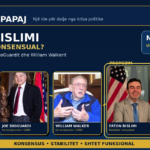 Albin Kurti & opozita duhet të bien dakord për Faton Bislimin, kandidatin për president konsensual propozuar nga kongresmeni JoeDioGuardi & ambasadori Walker Nga Elida Buçpapaj
 BIRN: Shqipëria, e papërgatitur për një ndryshim të rregullave të lojës nga BE
 Lisat nuk ikën- Poezi të reja nga Ismet TAHIRAJ
 Kamberi i përgjigjet Vuçiqit: “Nuk kuptoj çfarë po të shqetëson nga angazhimi im për shqiptarët”
 Shqipëria në planin rajonal për rikthimin e pyjeve, në fokus Alpet dhe pellgu i Drinit
 Kendi i humorit: I kërkon partnerit të bëjnë përsëri dashuri
 U miratua me 85 vota pro ndarja e re administrative, Shqipëria me 15 bashki më pak, si do funksionojnë! Ekspertët skeptikë: Nuk garanton shërbime për qytetarët